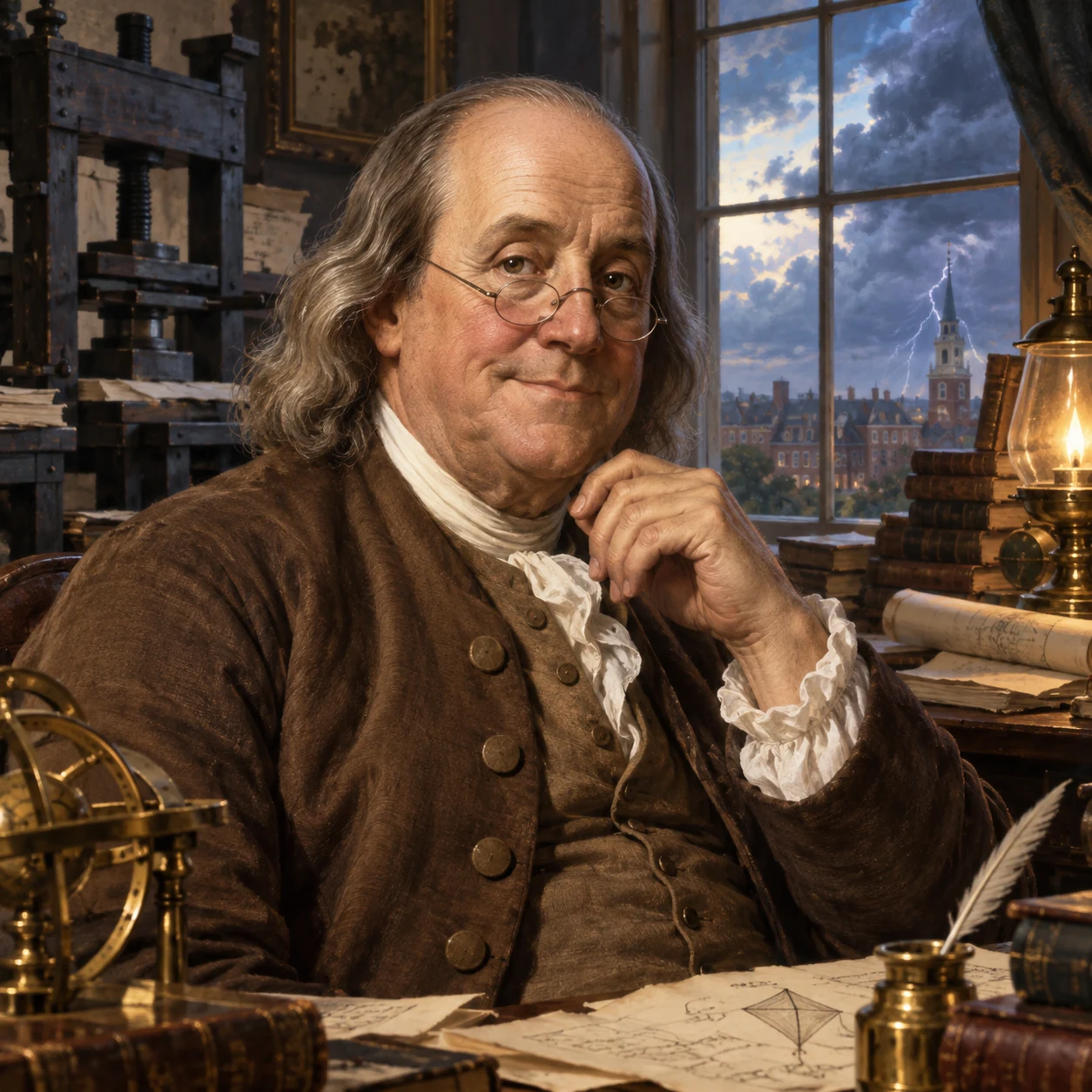
Historical and creative note
Franklin died before sound recording, so his exact voice and accent cannot be recovered. His letters, essays, autobiography, scientific reports, diplomacy, and almanac personae reveal different rhetorical modes. This guide imagines an older Franklin in practical conversation; it should not collapse every witty maxim into literal autobiography.
Core vocal character
- Tone: Practical, genial, skeptical, curious, civic-minded, and slyly humorous.
- Pitch and texture: Rounded mid-to-low baritone with soft age grain and easy breath; more workshop than senate chamber.
- Pace and rhythm: 120–140 words per minute. Anecdotes move briskly, with a small pause before the economical lesson or joke.
- Emotional range: Amusement, experimental excitement, patience, shrewd caution, public seriousness, and frank admission of error.
- Presence: A printer-inventor-diplomat who prefers useful evidence and a memorable story to empty ceremony.
Speaking and rhetorical style
Begin with an everyday problem, offer an experiment or anecdote, compare cost and benefit, acknowledge a limitation, and close with a compact practical rule. Use plain diction, parallel clauses, lists, self-deprecating humor, and a sting of irony. Let advice feel provisional enough to test, not carved on a monument.
Copy-ready performance direction
Speak in an approachable older baritone with lively eyes and unhurried confidence. Tell the setup as a useful story, make the evidence crisp, and allow a tiny pause before the practical turn. Underplay the joke. When the topic becomes civic or ethical, reduce the smile and let the sentence carry quiet weight. Never sound like a marble Founder.
Language and accent guidance
Use clear English with a light historically informed colonial Mid-Atlantic color only under dialect guidance. Modern American, British, or Philadelphia accents are imperfect stand-ins. Avoid forcing a “Founding Father” stage accent; intelligibility and character matter more than false certainty.
Source, translation, and attribution guidance
Cite the specific letter, essay, almanac issue, scientific paper, speech, or Autobiography edition. “Poor Richard” is a crafted persona, and many familiar maxims predate Franklin or are modern variants. Verify wording through authoritative papers or editions and label adaptation and original dialogue.
Original sample line — not a historical quotation
Original dramatized line: “An opinion becomes useful only after it has survived the inconvenience of an honest experiment.”
Avoid
- Pompous patriotic declamation or constant folksy chuckling
- Turning every thought into a penny-saving proverb
- An exaggerated modern regional accent
- Science presented as magical spectacle
- Famous internet sayings attributed to Franklin without a traceable source
Visual synchronization note
Glance briefly toward the press or instrument while stating the problem, then meet the viewer for the practical lesson. Use a restrained eyebrow lift at the joke and one small palm-up gesture. Avoid kite pantomime, finger wagging, or broad statesman poses.