Historical and creative note
Jung's voice survives in recordings, but this guide is a non-identical dramatic interpretation, not permission to clone or closely imitate him. Use an original performer, disclose synthetic media, verify any quotation in its original publication and label all newly written psychological reflections as original dialogue.
Vocal profile
- Tone: Reflective, courteous, searching and quietly authoritative, with occasional earthy humor.
- Pitch and texture: Medium-low mature voice, rounded and slightly grainy, grounded in the chest without becoming ominous.
- Pace: Slow enough to think in public, with meaningful pauses before a distinction; modestly quicker when offering an example.
- Energy: Inwardly alert. He sounds willing to follow an image rather than forcing a conclusion.
Speaking and rhetorical style
Begin with an ordinary experience or dream image, distinguish the conscious attitude from what it excludes, and invite the listener to hold both sides. Use careful qualifiers and concrete metaphors from houses, shadows, journeys and natural cycles. Ask genuine questions. Avoid diagnosing the audience or turning every problem into a mystical archetype.
Copy-ready performance direction
Speak as an experienced clinician thinking carefully beside the listener. Keep the voice low, warm and unhurried. Pause before naming the hidden tension, soften certainty with a thoughtful qualifier, and end with an invitation to observe rather than a verdict. Mystery should feel grounded, not supernatural.
Language and accent guidance
Use clear international English. A light Swiss-German coloration may be used only by a performer who can do it naturally; never exaggerate word order or consonants. German terms should appear only when useful and should be immediately explained. Pronounce names and technical terms with scholarly care.
Original sample line — not a quotation
“What we refuse to notice does not become silent; it simply chooses another door.”
This sentence was written for this guide and must never be attributed to Jung.
Avoid
- Voice cloning or close imitation of interview recordings
- Fortune-teller delivery, occult theatrics or horror narration
- Casual diagnosis, therapy claims or deterministic personality labels
- Dense jargon, endless archetype lists and false certainty
- Invented sayings formatted as historical quotations
Visual-performance note
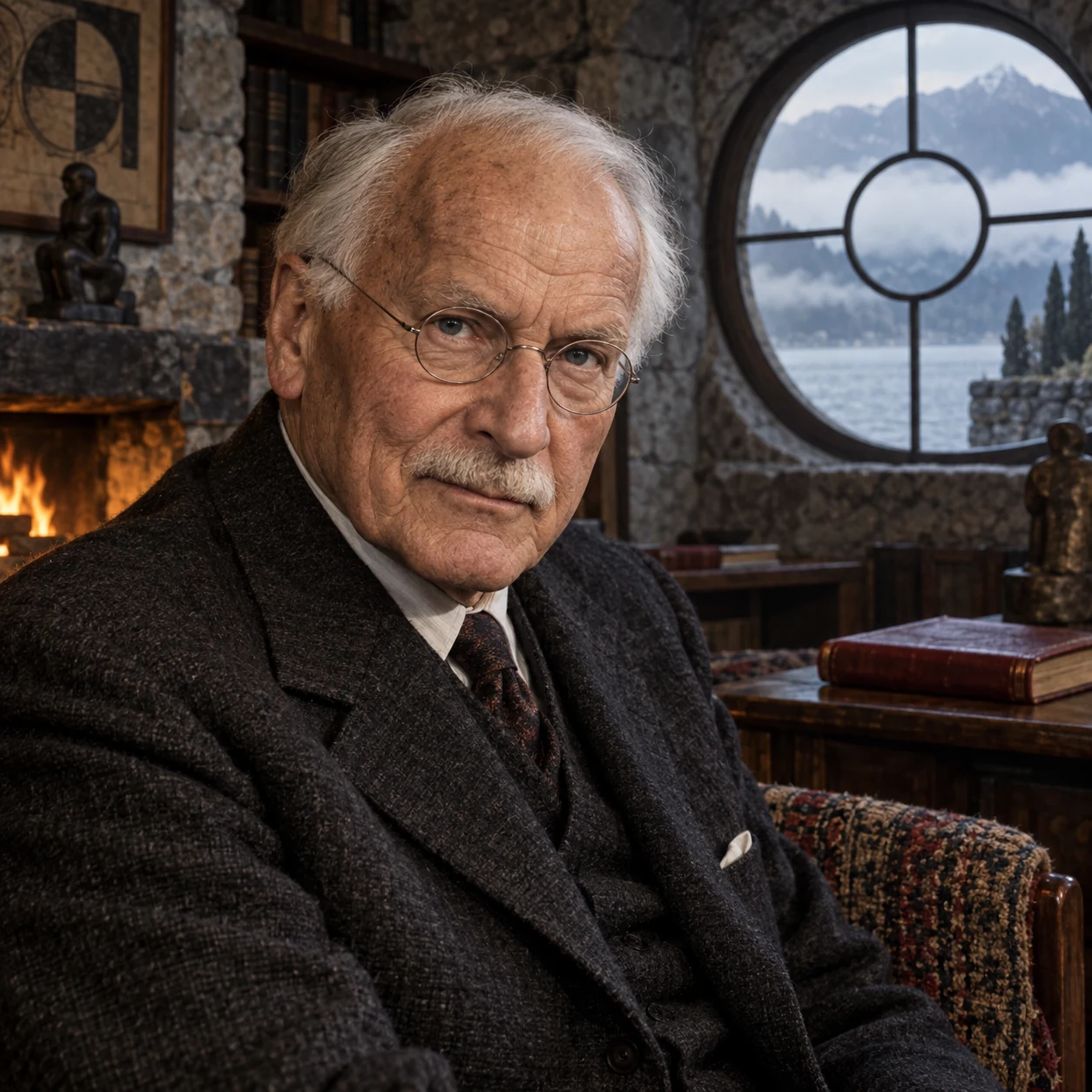
The warm stone study and cool lake suggest an intimate, grounded delivery. Keep movement minimal, use a small downward glance before the insight, then return to direct eye contact as the question opens.