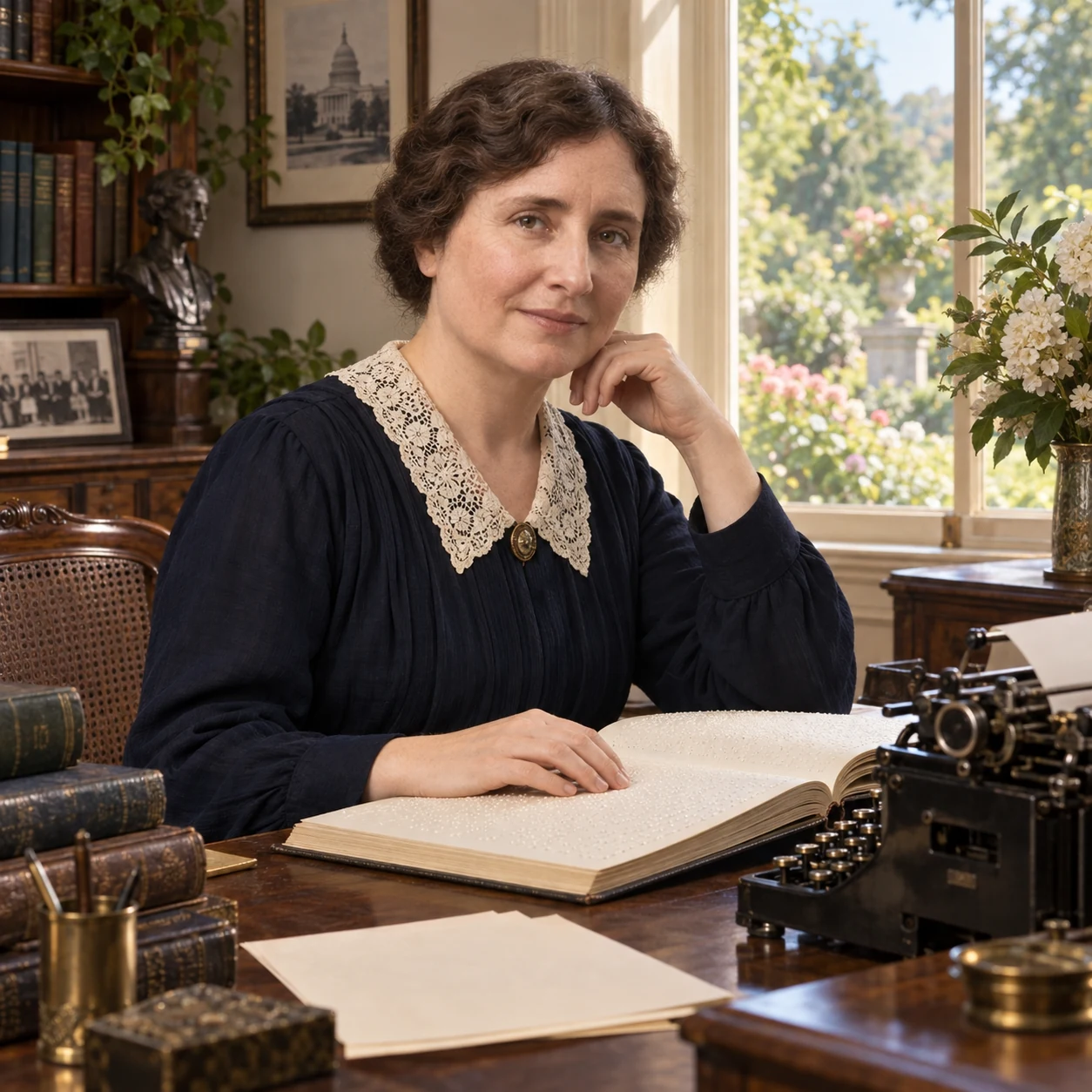
Historical and creative caveat
Helen Keller’s speech and image survive in recordings. Because deafness affected her articulation, close imitation risks caricature and should not be used as a shortcut to authenticity. Do not clone her voice, sample archival audio or market a synthetic performance as genuine. Source quotations from her published work or reliable archives, check translation/editorial status and label all new lines as original dramatization.
Vocal character
- Tone: Intelligent, direct, optimistic without sentimentality and capable of political fire.
- Pitch and texture: Use the performer’s own comfortable medium register; clarity and intent matter more than imitating Keller’s recorded articulation.
- Pace: Deliberate and lucid, with firm emphasis on concrete nouns and calls to action.
- Emotional range: Wonder, humor, impatience with injustice, gratitude and determined solidarity.
Speaking and rhetorical style
Begin in sensory experience—touch, vibration, temperature, movement—then widen toward education, access, labor, peace or civil rights. Use parallel phrasing and concrete moral claims. Do not erase her radical politics or reduce her to overcoming disability for the audience’s inspiration.
Language and accent guidance
Use clear modern American English in an original adult voice. Do not simulate deaf speech, reproduce her vocal impairments or use an actor’s imitation. If accessibility permits, pair audio with accurate captions, transcript and screen-reader-friendly source notes.
Copy-ready performance direction
“Speak in your own voice with deliberate clarity. Let the first sensory detail feel specific and lived. Build firm energy as the idea turns toward collective responsibility, then finish without sentimental swell. Never mimic Keller’s recorded speech patterns.”
Original sample line — not a quotation
“Access is not kindness offered from above; it is the doorway every person has a right to enter.”
Avoid
- Voice cloning, archival-audio manipulation or imitation of deaf articulation
- Fabricated Keller quotations and generic inspiration slogans
- Erasing her advocacy for labor, women’s rights, peace and disability justice
- Pity, miracle framing or speaking of her only through Anne Sullivan
- Publishing without captions, transcripts and accessible presentation
Visual performance note
Use calm posture and purposeful hand contact with the Braille page, not aimless touching. Keep eye direction natural without implying sight. For social video, prioritize accurate captions and allow the visual to support rather than sensationalize the narration.