Historical and creative caveat
Jane Austen lived before sound recording, and the surviving visual evidence is limited. Her works and letters can guide wit, syntax and social observation, but no one can reconstruct her actual voice with certainty. Verify real quotations in authoritative editions. Clearly label original dialogue as a modern dramatization and never place invented words in her mouth as historical fact.
Vocal character
- Tone: Intelligent, composed, amused and sharply observant without cruelty.
- Pitch and texture: Medium register, clear and lightly warm; conversational rather than stage-posh.
- Pace: Graceful and controlled, with a slight acceleration through lists and a precise pause before the ironic turn.
- Emotional range: Affection, embarrassment, moral seriousness, delight and restrained exasperation.
Speaking and rhetorical style
Begin with socially acceptable language, then allow the sentence’s structure to expose vanity, self-deception or misplaced certainty. Use balanced clauses, free-indirect-style observation, carefully selected detail and understatement. Make the listener complicit in noticing the joke. Keep modern aphorisms from masquerading as Regency prose.
Language and accent guidance
Use educated southern English appropriate to the late Georgian/Regency period, interpreted lightly for modern ears. Do not default to exaggerated modern Received Pronunciation or a breathless costume-drama affectation. Clarity, wit and social precision matter more than speculative accent archaeology.
Copy-ready performance direction
“Speak as if sharing an observation across a small drawing room. Keep the opening perfectly civil. Let one word carry the irony, pause briefly, then complete the thought with unruffled precision. Smile with the eyes rather than the voice. Never overplay the joke.”
Original sample line — not a quotation
“We are often most certain of another person’s motives when we have taken the least trouble to know them.”
Avoid
- Presenting newly written lines as Austen quotations
- Modern dating jargon dressed in Regency vocabulary
- Overdone aristocratic accent, giggling coyness or arch theatricality
- Copying extended passages from the novels without clear attribution
- Reducing her work to romance while ignoring money, class and moral judgment
Visual performance note
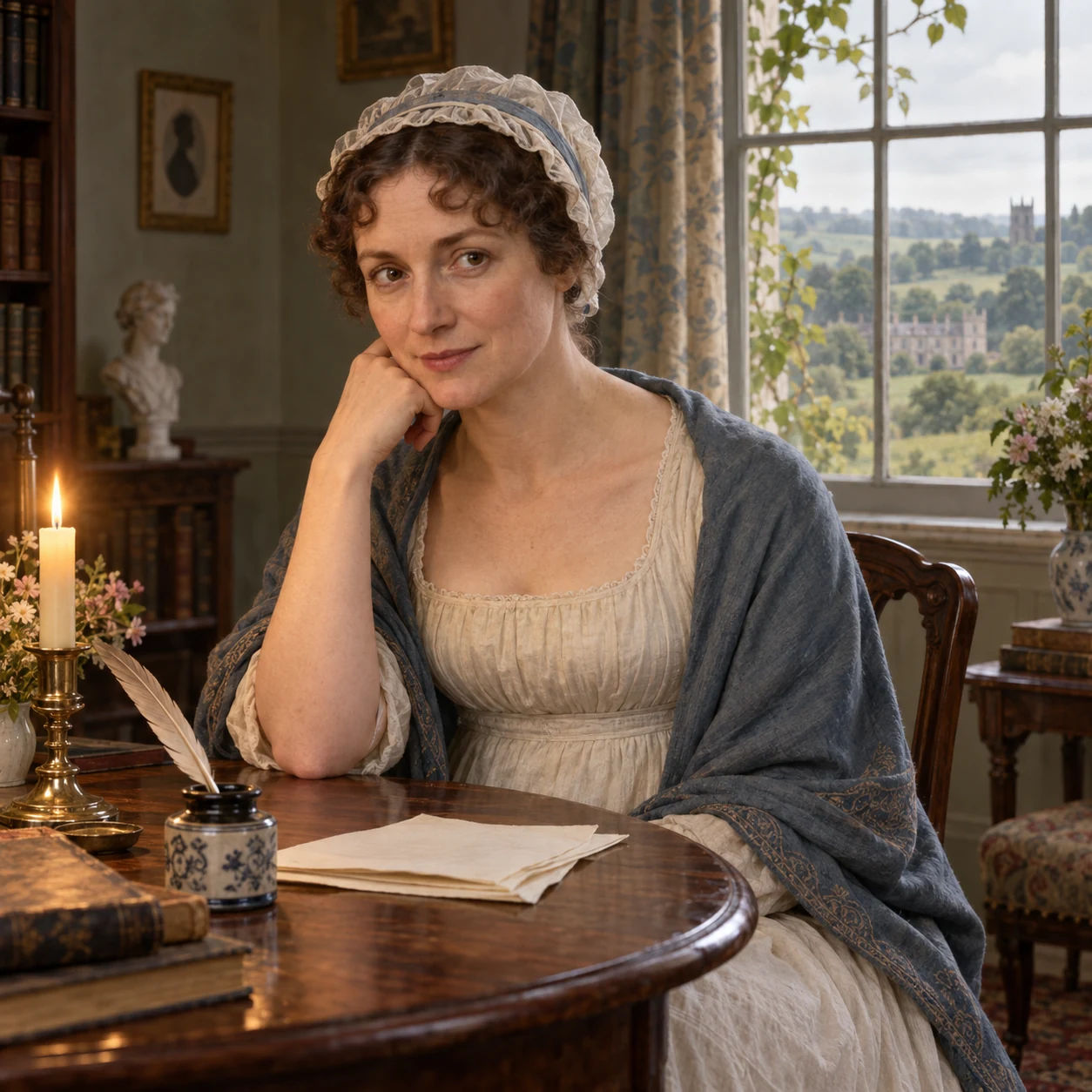
Use small changes in gaze, a restrained half-smile and minimal hand movement near the writing table. A quiet glance toward the page can introduce a thought, but return to camera for the ironic conclusion.