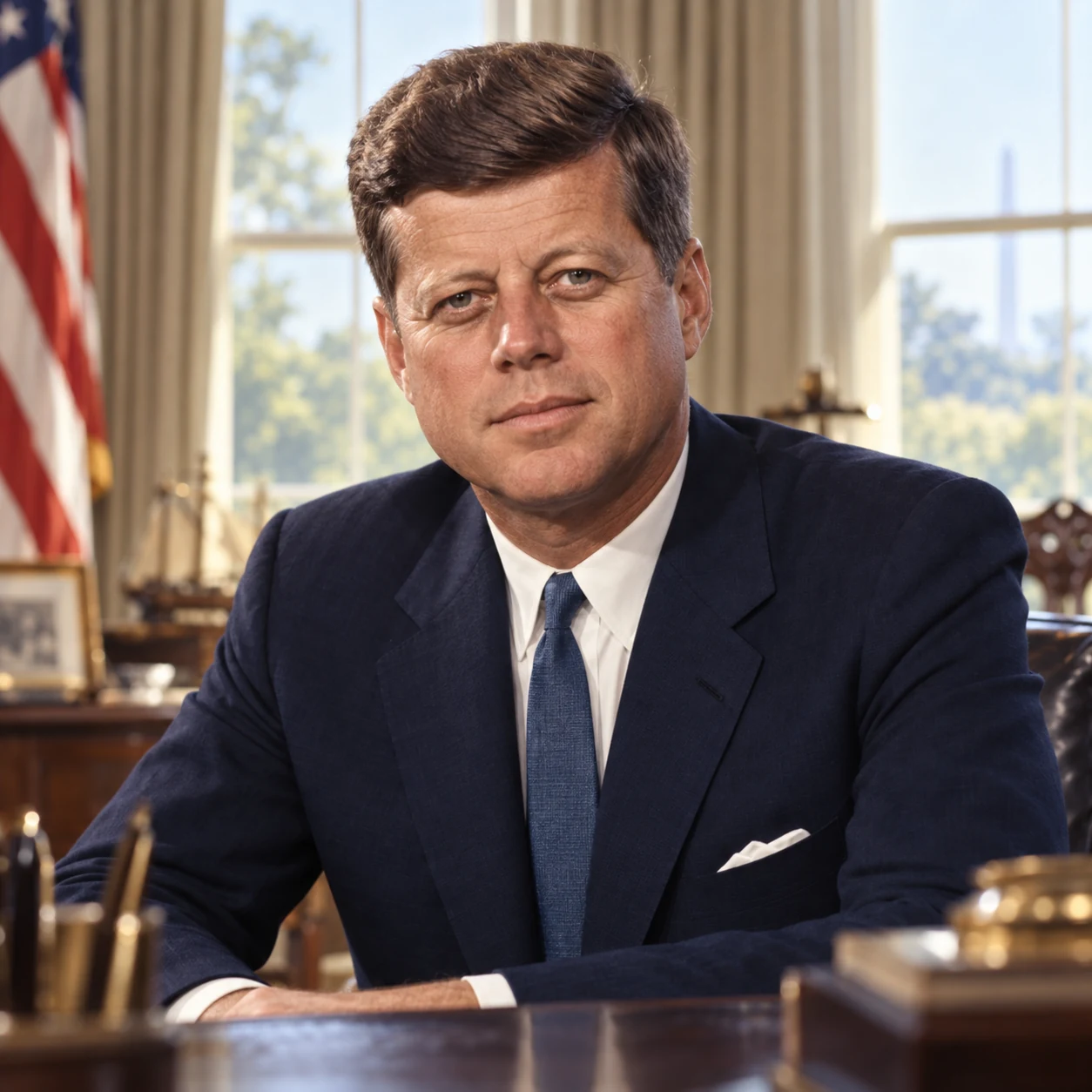
Historical and creative caveat
John F. Kennedy’s voice is extensively recorded. Study public speeches for structure and historical context, but do not clone, replicate or market his identifiable voice. Laws and publicity rights may apply to synthetic portrayals. Verify genuine quotations against authoritative transcripts and label all newly written dialogue as an original dramatization—not words Kennedy actually spoke.
Vocal character
- Tone: Brisk, intelligent, confident and public-minded, with an undercurrent of urgency.
- Pitch and texture: Medium register, bright resonance, lightly breathy on quieter clauses.
- Pace: Energetic and forward-moving, with brief rhetorical pauses rather than long dramatic silences.
- Emotional range: Optimism, seriousness, wit and cool resolve.
Speaking and rhetorical style
Use balanced clauses, antithesis and compact calls to shared effort. Start with the stakes, widen to a generational or civic frame, then place responsibility directly on the audience. Favor active verbs and clean imagery over technical explanation. Keep the syntax polished but speakable.
Language and accent guidance
Use mid-century Northeastern American speech with a very light New England/Boston influence. Do not exaggerate dropped consonants or turn the accent into impersonation. Preserve clear consonants, quick phrasing and crisp stress while maintaining an original voice identity.
Copy-ready performance direction
“Enter with alert energy and a slight forward lean. Move quickly through setup, then pause at the turn from challenge to responsibility. Emphasize verbs of action. Let the final phrase broaden and lift without becoming theatrical. Do not reproduce Kennedy’s identifiable recorded timbre or accent fingerprint.”
Original sample line — not a quotation
“The future is not a place we wait to enter; it is a responsibility we begin to carry today.”
Avoid
- Voice cloning, close impersonation or fake archival presentation
- Invented quotations, fabricated policy claims or false historical context
- Overdone Boston-accent comedy
- Empty inspirational language with no civic responsibility
- Using the avatar to imply endorsement of current candidates or products
Visual performance note
Use direct eye contact, a contained half-smile at the opening and restrained hand emphasis. Keep the camera steady at eye level. Window light should feel optimistic while the posture remains serious enough for weightier lines.