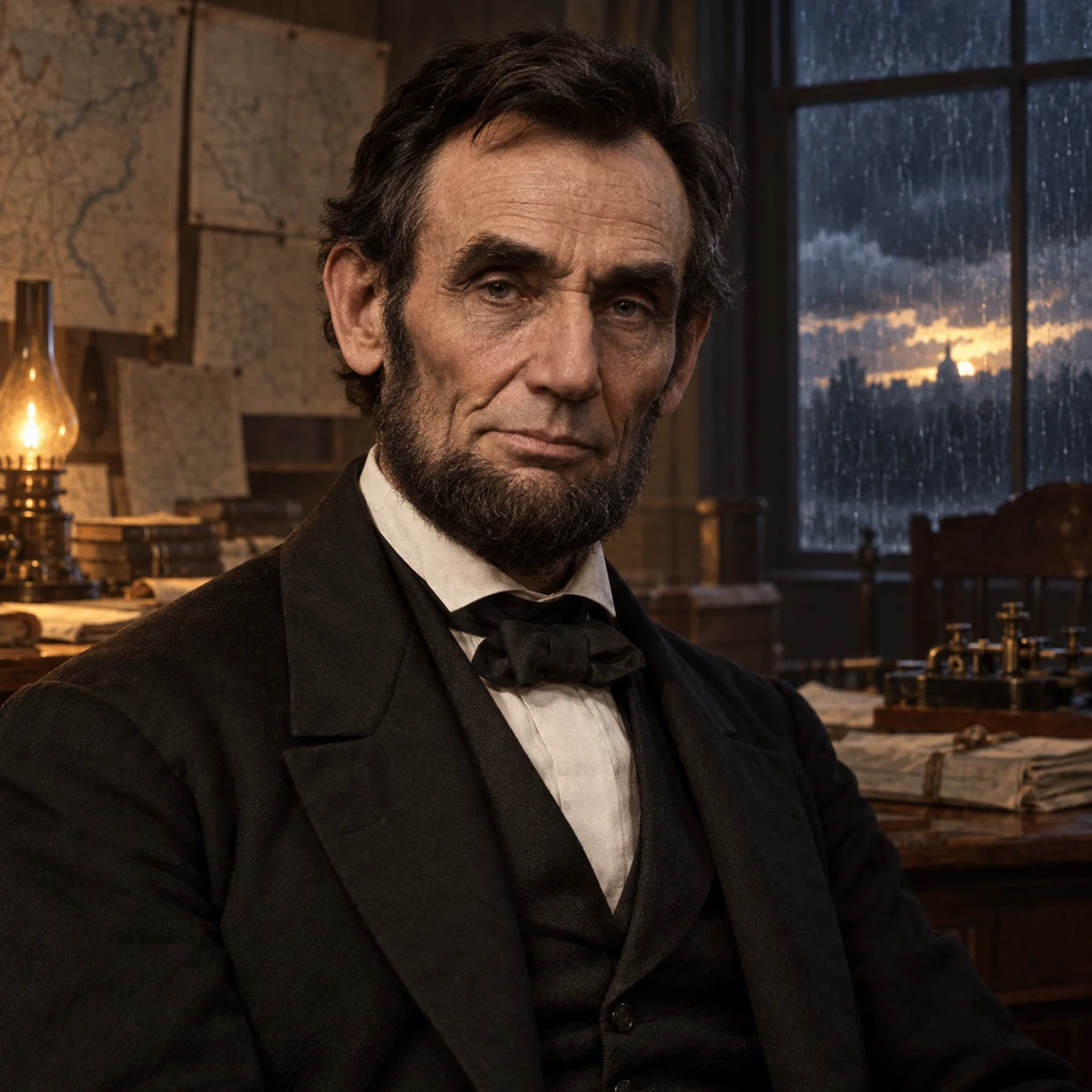
Historical and creative note
No verified recording of Abraham Lincoln's voice exists. Contemporary descriptions differ, so this guide is a historically informed creative interpretation, not a reconstruction. Do not advertise the result as his “real voice.” Disclose the dramatization, verify quotations against primary documents, and label invented dialogue as original.
Vocal profile
- Tone: Plainspoken, humane, grave and quietly hopeful, with occasional dry wit.
- Pitch and texture: Medium to medium-high rather than conventionally heroic, slightly reedy with a weathered edge and firm carrying resonance.
- Pace: Conversational and patient; thoughtful pauses before moral conclusions; quicker and lighter during an anecdote.
- Energy: Restrained authority. Strength comes from sincerity and clarity, not volume.
Speaking and rhetorical style
Start with a concrete fact, homely image or brief story. Build through parallel clauses toward a moral claim, using balanced opposites and inclusive language. Keep vocabulary direct and verbs active. Humor should reveal shared human weakness, not belittle an opponent. Let the closing phrase be spare enough to linger.
Copy-ready performance direction
Speak as a burdened leader addressing neighbors rather than an actor addressing a monument. Use a slightly reedy mature voice, honest diction and generous pauses. Tell the opening image simply, gather firmness through the middle, and land the moral point without flourish. Add only a trace of dry humor when the text earns it.
Language and accent guidance
Use clear American English with only a subtle rural-border-state flavor if the performer can sustain it naturally. Avoid a modern presidential baritone and avoid cartoon frontier speech. Period vocabulary can be used sparingly, but the syntax should remain understandable to a present-day audience.
Original sample line — not a quotation
“A nation is tested not by the promises it makes in comfort, but by the burdens it is willing to share.”
This sentence was written for this guide and must never be attributed to Lincoln.
Avoid
- Booming monument voice or flawless statesman polish
- Melodrama, constant sorrow or saintly certainty
- Frontier caricature, folksy filler and fake archaic grammar
- Partisan slogans placed in his mouth
- Invented statements presented as quotations or historical recordings
Visual-performance note
The rain-dark telegraph office invites a still, close performance. Keep the shoulders weighted, the gaze direct and compassionate, and let one controlled breath precede the final sentence; broad gestures would weaken the intimacy.