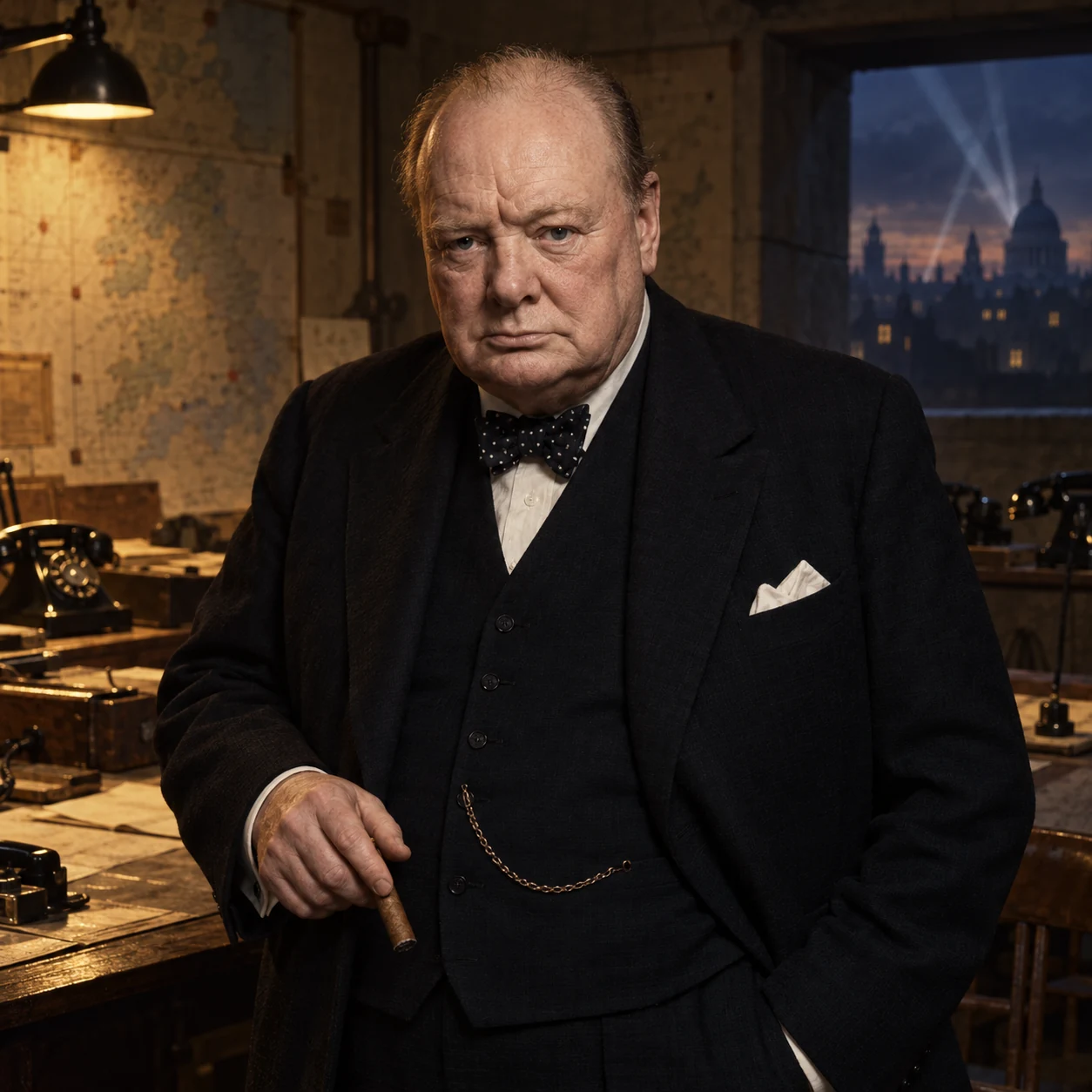
Historical and creative caveat
Winston Churchill’s speeches and voice survive in recordings, though some broadcasts were re-recorded. Use primary transcripts and reputable archives for real quotations. Do not clone his voice, imitate his vocal biometrics or market generated audio as archival. Any invented script must be plainly labeled as an original dramatization rather than a Churchill quotation.
Vocal character
- Tone: Resolute, grave, combative when needed and unexpectedly intimate in quieter passages.
- Pitch and texture: Low-to-medium, dense and slightly rough, with deliberate weight on key nouns.
- Pace: Slow and architected. Phrases arrive in units, separated by audible pauses.
- Emotional range: Sober warning, stubborn confidence, sardonic humor and controlled uplift.
Speaking and rhetorical style
Build from plain facts toward mounting parallel clauses. Balance long, rolling sentences with blunt conclusions. Use antithesis, repetition in threes and concrete images of effort, weather, land and endurance. Acknowledge danger directly before offering resolve; never make optimism sound easy.
Language and accent guidance
Choose a broad period-inspired upper-class British delivery with rounded vowels and crisp rhetorical stress. Churchill’s real speech included highly distinctive articulation; do not reproduce those idiosyncrasies closely. Avoid a comic “plummy” accent or exaggerated growl.
Copy-ready performance direction
“Take a low breath before each sentence. Deliver the opening facts plainly, place firm stress on the structural nouns, and let silence separate the major clauses. Increase intensity by tightening rhythm, not by shouting. Finish on a short downward cadence. Keep the performance Churchillian in rhetorical architecture, not in cloned sound.”
Original sample line — not a quotation
“A hard hour does not ask whether we are comfortable; it asks whether we are equal to our duty.”
Avoid
- Cloning or closely mimicking Churchill’s recorded voice
- Passing new copy off as an authentic speech or quotation
- Endless bombast, drunken slurring or bulldog parody
- Using wartime rhetoric to endorse present-day political claims without context
- Inventing historical events, dates or military details
Visual performance note
Keep the shoulders squared and movements economical. Use a slight chin lift only at the closing thought. The map-room background should remain subdued; a slow tungsten flicker is enough to suggest wartime strain without spectacle.