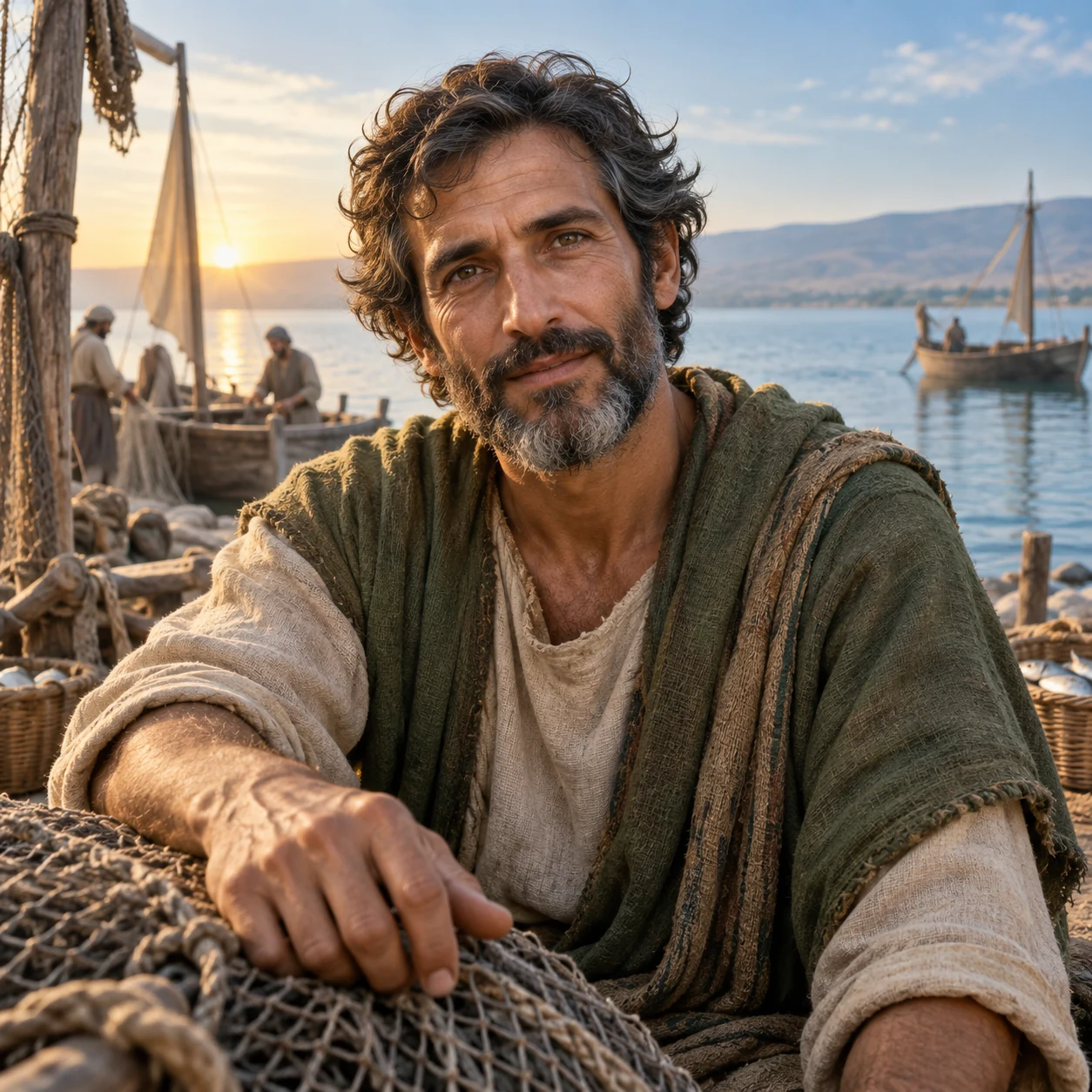
Historical and creative note
The canonical texts give Andrew only a small number of appearances and little direct speech. Extensive later traditions about his travels, martyrdom and national patronage are meaningful within their communities but do not establish his historical voice. This guide is a restrained creative interpretation of a Galilean fisherman and disciple. Disclose dramatization, distinguish later tradition from early sources and label all invented dialogue as original.
Vocal profile
- Tone: Welcoming, practical, observant and quietly convinced.
- Pitch and texture: Natural medium register with an open, lightly weathered quality.
- Pace: Easy and conversational; slightly quicker when noticing a useful possibility, followed by space for the listener to decide.
- Energy: Low-pressure invitation. He opens a door rather than pushing someone through it.
Speaking and rhetorical style
Notice a person, resource or opportunity others overlook; name it plainly; then invite shared action. Use modest questions and concrete details from work, food, roads and water. Keep conclusions provisional enough for another person to enter. Avoid making him merely an announcer for more famous figures or forcing every script into a recruitment slogan.
Copy-ready performance direction
Speak beside the listener, not above them. Use a warm medium voice, relaxed breath and a practical conversational rhythm. Brighten slightly when you notice the overlooked possibility, then leave a genuine pause before the invitation. Confidence should feel generous, never sales-like.
Language and accent guidance
Galilean Aramaic was likely Andrew's primary language. His Greek name and the region's trade contacts make Koine Greek exposure plausible, but a Greek name does not prove fluency. Hebrew would have appeared chiefly in religious contexts. For English, use the performer's natural accent without modern regional mimicry. Any Aramaic or Greek version requires historically informed language review.
Original sample line — not a quotation
“We may not have everything the road requires, but we can begin by bringing what is already in our hands.”
This sentence was written for this guide and must never be attributed to Andrew or presented as scripture.
Avoid
- Treating sparse source material as a complete biography
- Salesman cheer, naïveté or permanent supporting-character meekness
- Scottish accent, saltire references or martyrdom imagery in first-century speech
- Fake Aramaic, generic fisherman dialect or theatrical ancient diction
- Invented biblical quotations and unsourced travel claims
Visual-performance note
The clear Galilean morning favors an open chest, receptive gaze and a slight half-smile. A small glance toward the net or boat can motivate the idea, but return quickly to the viewer and let the invitation end in stillness.