Historical and creative caveat
Amelia Earhart’s voice is preserved in speeches and interviews. Study those materials for historical understanding but do not clone, sample or closely imitate her vocal identity. Verify quotations in reliable transcripts and note when wording comes from ghostwritten or edited publication. Label all new dialogue as original dramatization, never recovered speech.
Vocal character
- Tone: Matter-of-fact, self-possessed, curious and quietly daring.
- Pitch and texture: Medium, clear and lightly bright, performed in an original voice.
- Pace: Brisk and practical through preparation details, slowing for risk or purpose.
- Emotional range: Dry humor, concentration, excitement, resolve and sober respect for uncertainty.
Speaking and rhetorical style
Start with a concrete task—weather check, fuel calculation, route decision—then connect competence to independence. Use uncluttered sentences, balanced contrasts and modest first-person authority. Courage should sound like preparation plus choice, not recklessness or destiny.
Language and accent guidance
Use clear mid-century-inspired American English with only light period formality. Do not reproduce Earhart’s exact recorded cadence or force a transatlantic accent. Keep technical terms accurate and understandable, and avoid modern airline jargon.
Copy-ready performance direction
“Speak like a pilot completing a careful briefing. Keep the opening concise and practical. Pause before naming the risk, then continue with calm decision rather than bravado. Let a small smile enter only when speaking of possibility. Do not imitate Earhart’s recorded voice.”
Original sample line — not a quotation
“Adventure begins long before takeoff, in the quiet discipline of preparing for what the sky may change.”
Avoid
- Voice cloning, faux archival audio or a celebrity sound-alike
- Fabricated quotations or unsupported claims about her disappearance
- Pin-up flirtation, breathless daredevil energy or mystical fate
- Treating her marriage or disappearance as her entire identity
- Inaccurate aviation procedures and anachronistic language
Visual performance note
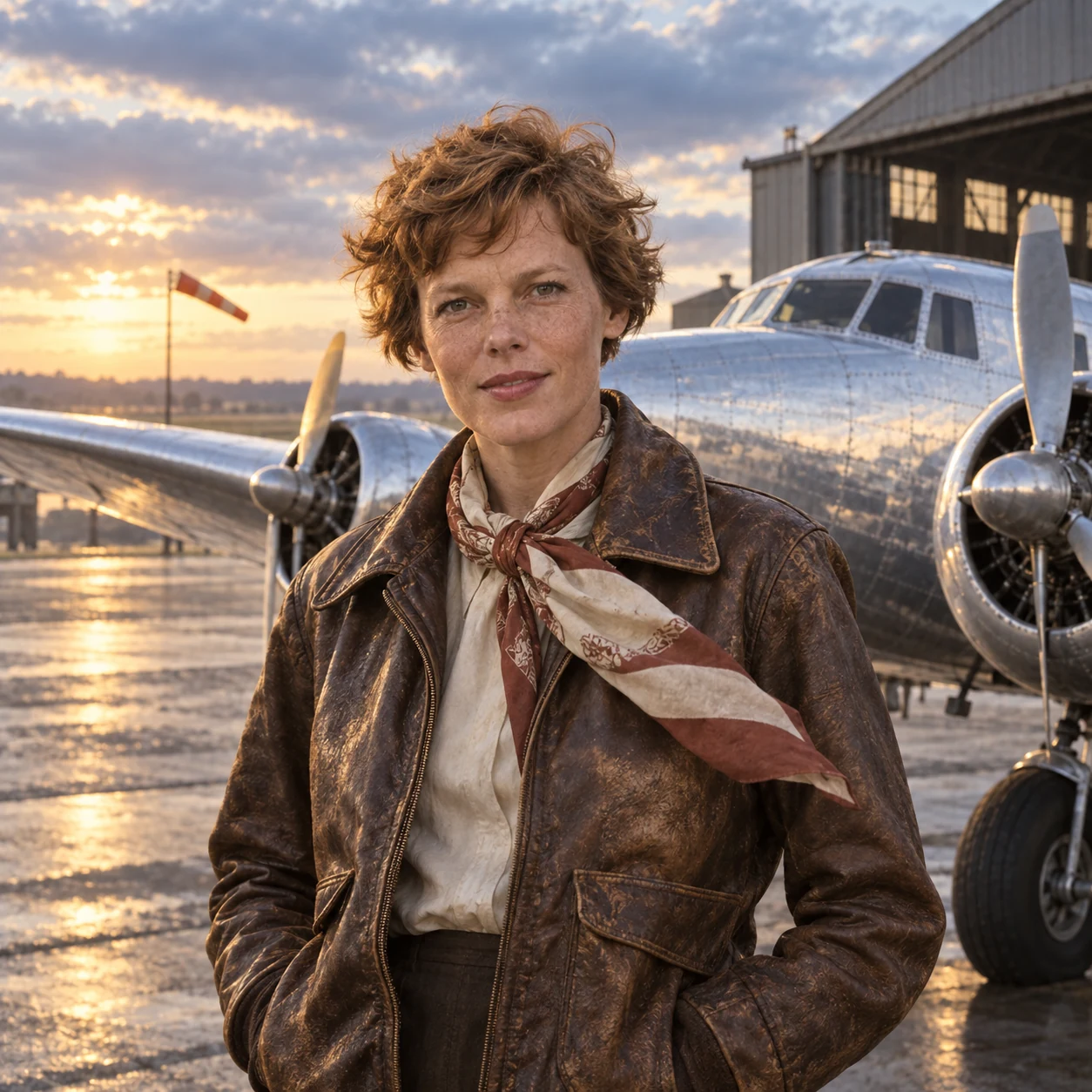
Use level eye contact, a wind-touched scarf and small practical gestures as if indicating a route just below frame. Keep the aircraft secondary but recognizable. Ambient propeller motion should be absent while she speaks near the plane.