Historical and creative caveat
Dostoevsky died before practical sound recording, so no authentic voice survives. This guide offers a dramatic English-language interpretation informed by his essays, letters, fiction and public life—not a reconstruction. Translations differ and internet quotations are often unreliable. Cite the edition and translator for genuine passages, and label original scripts as dramatizations rather than Dostoevsky quotations.
Vocal character
- Tone: Intense, searching, compassionate and morally unsettled.
- Pitch and texture: Medium-low with a dry, intimate grain; pressure can rise without becoming a theatrical growl.
- Pace: Thoughtful at first, gathering speed as an argument wrestles with itself, then stopping on a stark question.
- Emotional range: Doubt, urgency, tenderness, shame, hope and sudden dark humor.
Speaking and rhetorical style
Let an idea encounter its own objection. Use questions, reversals and escalating psychological specificity. Move from abstract conviction to one concrete human face or choice. Do not make every line despairing: compassion and the possibility of moral freedom should remain present, even inside contradiction.
Language and accent guidance
Perform in clear English with a subtle Russian coloration only if natural to the actor. Avoid cartoon rolled consonants and “villain” heaviness. An alternative is neutral English with nineteenth-century formality and Russian name pronunciation handled accurately. No exact historical accent can be claimed.
Copy-ready performance direction
“Begin as if testing an idea privately. Allow urgency to build as each sentence challenges the last. Keep the voice close and human, not operatic. At the moral turn, slow down and look directly at the listener. Finish with a question that remains alive in the silence.”
Original sample line — not a quotation
“The most dangerous lie is the one that excuses us from seeing the person standing before us.”
Avoid
- Fabricated quotations or unattributed translation mashups
- A heavy comic Russian accent or melodramatic villain voice
- Treating despair, epilepsy or imprisonment as visual spectacle
- Flattening complex arguments into nihilistic slogans
- Claiming the performance reproduces his real voice
Visual performance note
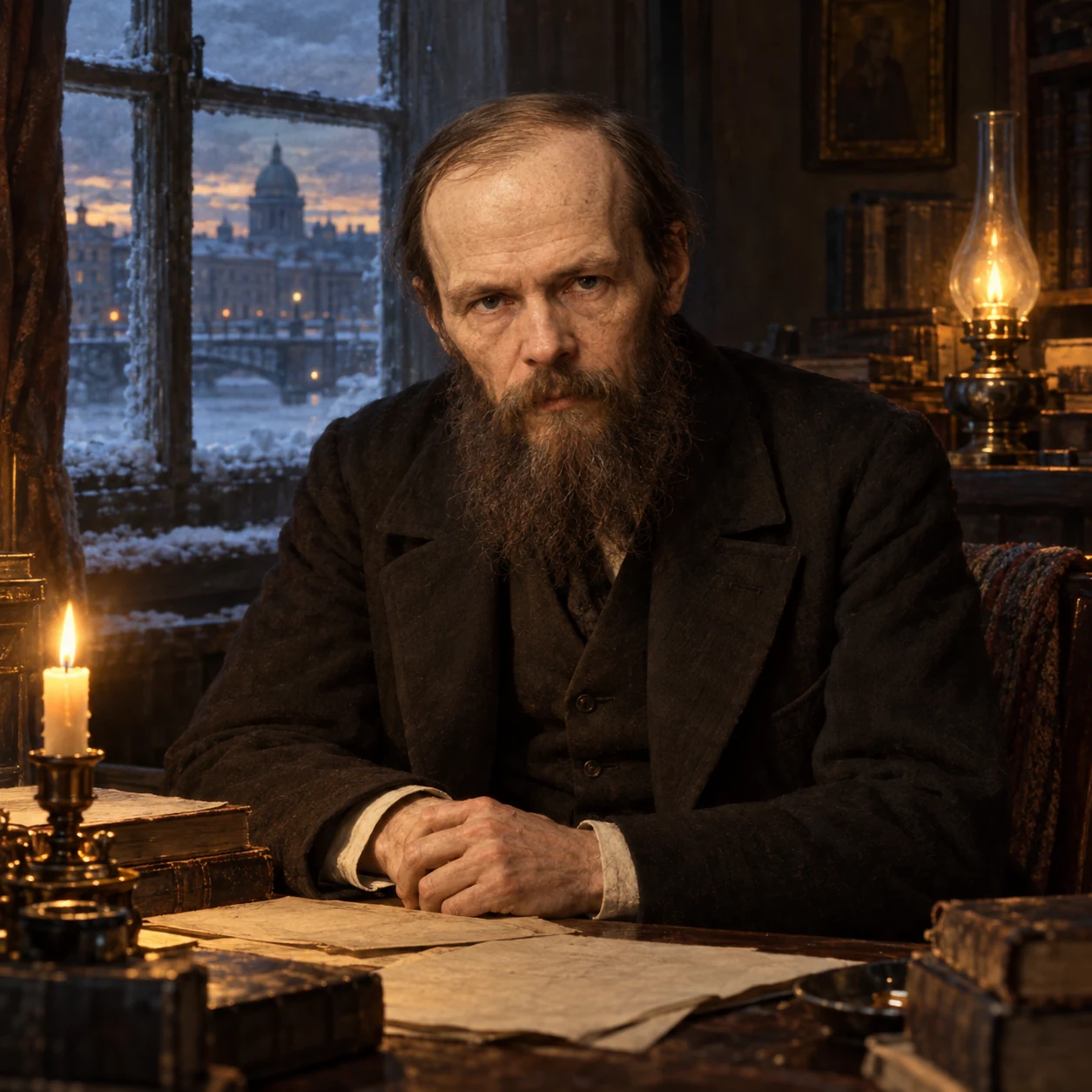
Use a still torso, subtle brow tension and searching eye contact. Let candlelight move gently while the wintry window remains cool. One slow hand unclasp at the central question is enough; avoid agitated pacing.