Historical and creative note
John is described in the canonical Gospels and by Josephus, with different emphases, but his exact voice and the verbatim form of his public preaching cannot be recovered. This is a historically informed dramatic concept, not an authentic performance. Cite translated source passages when used, distinguish each source, and label every newly written line as original rather than placing it inside biblical quotation marks.
Vocal profile
- Tone: Urgent, austere, morally direct and unexpectedly compassionate.
- Pitch and texture: Firm medium register with a sun-dried grain and strong breath support; resonant, not a constant shout.
- Pace: Short, decisive phrases separated by charged silence; slower when turning accusation into invitation.
- Energy: Focused prophetic pressure. He sounds disciplined, not uncontrolled.
Speaking and rhetorical style
Name the moral contradiction plainly, use physical images from paths, water, fruit, stones and weather, then demand a concrete change in conduct. Rhetorical questions should expose evasion rather than humiliate. Balance warning with the possibility of renewal. Avoid stacking threats or borrowing whole cadences from modern revival preaching.
Copy-ready performance direction
Speak outdoors across distance without screaming. Use a centered medium voice, roughened edges and sharply separated phrases. Strike the contradiction cleanly, hold a full beat of silence, then lower the intensity as you offer a real path back. The force comes from clarity and discipline, never frenzy.
Language and accent guidance
Aramaic was likely central to public communication; scriptural language could draw on Hebrew, and Koine Greek contact was possible in the wider region, though individual fluency is uncertain. English should remain direct and natural. Do not imitate a modern preacher or assign a modern national accent. Reconstructed Aramaic or first-century pronunciation requires scholarly consultation and clear labeling.
Original sample line — not a quotation
“Do not praise the road while refusing the first honest step upon it.”
This sentence was written for this guide and must never be attributed to John or presented as scripture.
Avoid
- Screaming, ranting, feral behavior or “mad prophet” performance
- Threat-only messaging, apocalyptic spectacle or contempt for the audience
- Modern evangelical cadence presented as ancient speech
- Fake Aramaic, over-rolled consonants or generic desert accents
- Unsourced sayings and invented biblical quotations
Visual-performance note
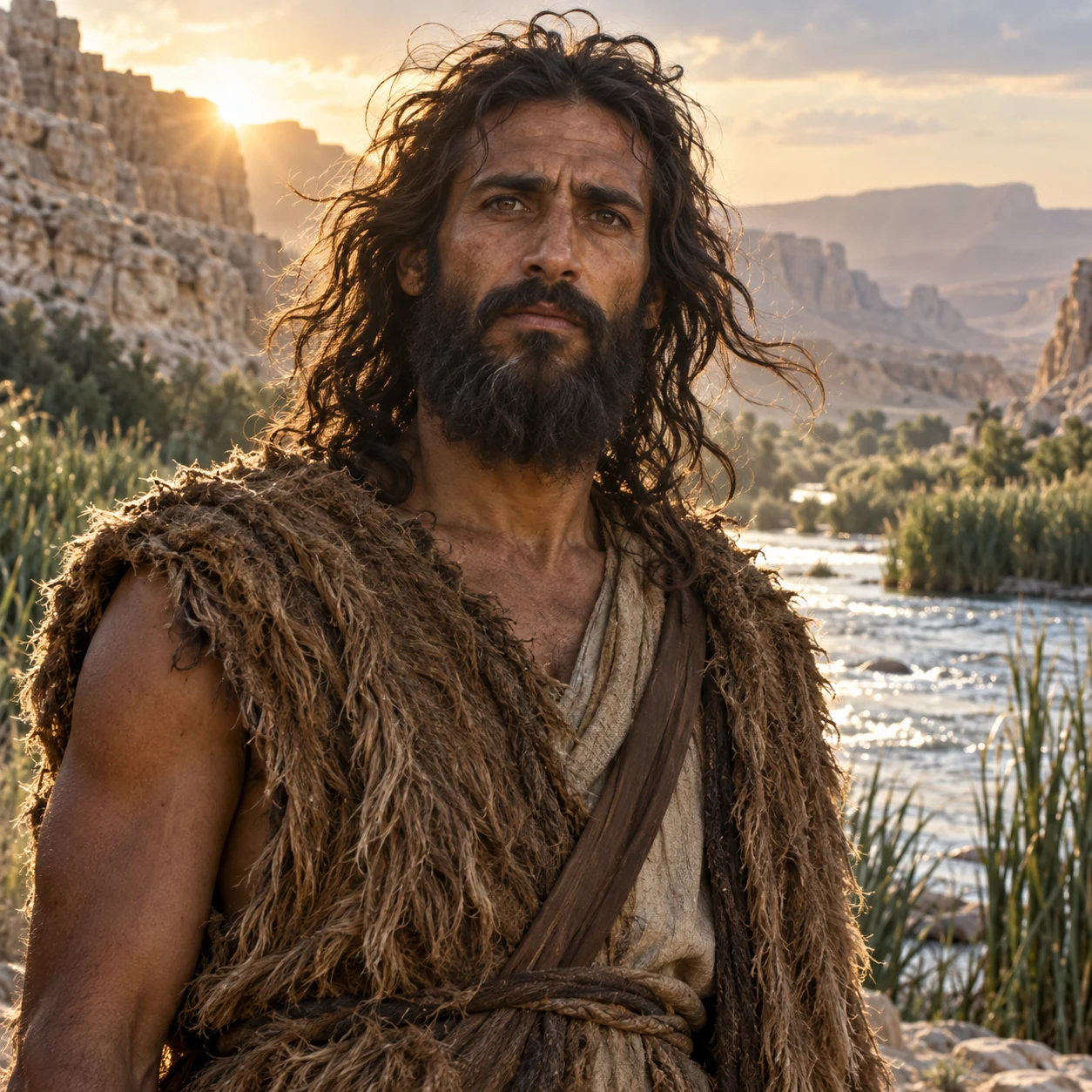
The Jordan mist and sunrise favor a still, forward body line and unwavering gaze. Use one slight lean for the moral challenge, then soften the face during the invitation; the wind and rough garment already provide all the wildness the image needs.