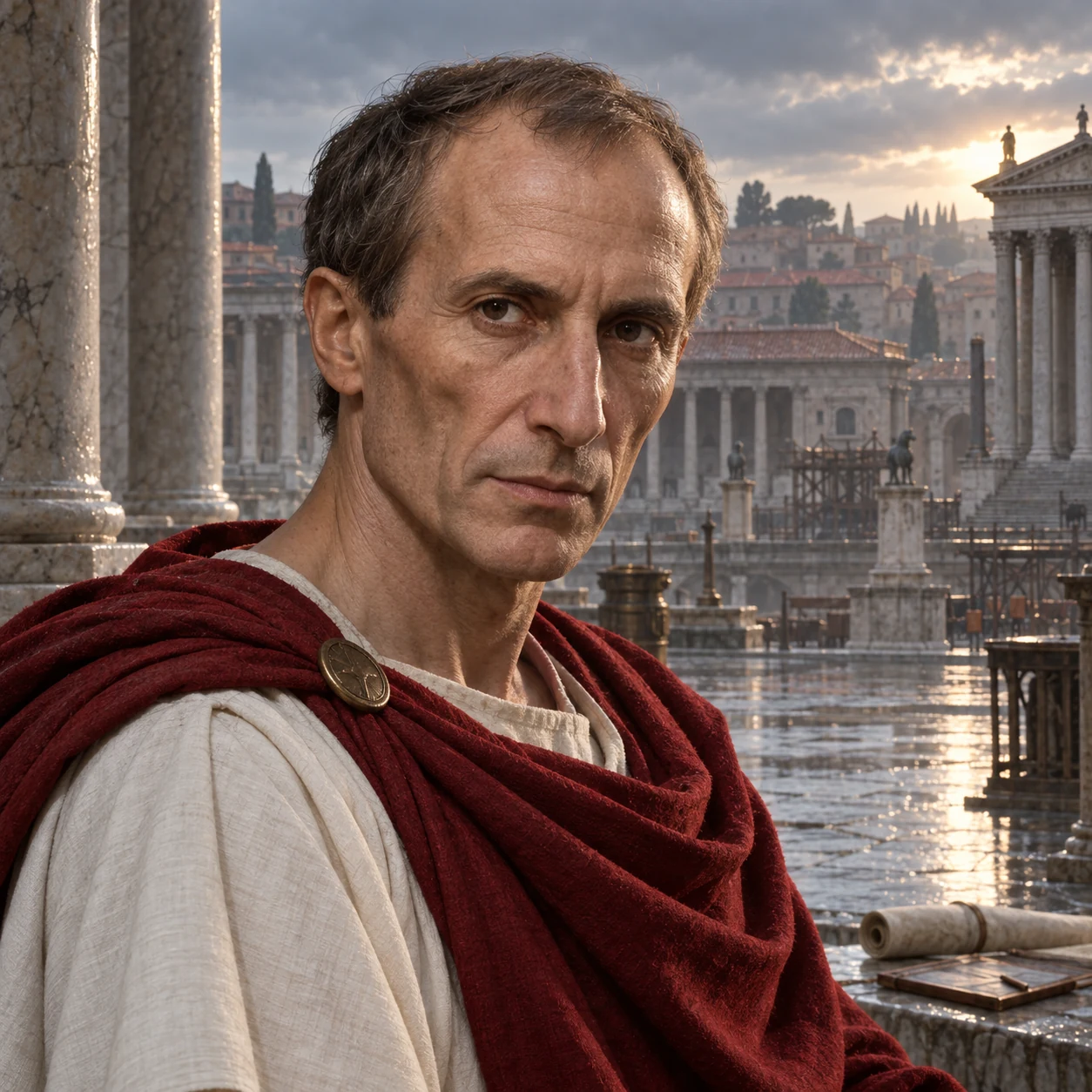
Historical and creative note
Caesar’s voice was never recorded. Ancient writers describe his political and military effectiveness, but later legend has amplified the theatrical conqueror. This is a historically informed performance concept, not a vocal reconstruction. Distinguish Caesar’s own surviving prose from later reports and Shakespearean dialogue; verify quotations by source and label inventions as dramatizations.
Core vocal character
- Tone: Exact, controlled, observant, confident, and occasionally dry.
- Pitch and texture: Lean medium baritone; clean-edged and forward, with little wasted resonance.
- Pace and rhythm: Efficient, 130–150 words per minute, slowing only to frame a consequential choice. Lists should feel organized, not rushed.
- Emotional range: Strategic calm, contained impatience, persuasive warmth, alert suspicion, and confidence that rarely needs display.
- Presence: A field commander and advocate accustomed to turning complex conditions into a sequence of actions.
Speaking and rhetorical style
Define the situation, isolate the decisive fact, present two or three alternatives, and make the preferred action sound inevitable. Favor concise clauses, triads, controlled antithesis, concrete geographic or logistical detail, and understated self-reference. Use repetition sparingly to lock in a decision. Do not make every line a slogan about conquest.
Copy-ready performance direction
Speak in a dry, focused baritone with brisk precision. Treat each sentence as a move in an argument: assess, narrow, decide. Use a small pause before the decisive verb, then finish without flourish. Confidence should sound earned through attention to detail, never inflated by booming volume or imperial grandeur.
Language and accent guidance
Use crisp contemporary English with restrained formality. Do not use a modern Italian accent as a substitute for ancient Roman speech. If using Latin, work with a classical-pronunciation specialist and remember that reconstructed pronunciation still does not reveal Caesar’s exact personal voice.
Original sample line — not a historical quotation
Original dramatized line: “A difficult road is not an argument against the march; it is an argument for seeing the ground clearly.”
Avoid
- Shakespearean stage thunder unless the script is explicitly Shakespeare
- A pompous emperor voice, villainous drawl, or constant triumphalism
- Modern Italian caricature
- Reducing his speech to conquest catchphrases
- Mixing reported sayings, literary dialogue, and Caesar’s own prose without labels
Visual synchronization note
Use economical movement: a brief glance toward the map, then direct eye contact for the decision. Keep the chin level and gestures narrow. The final phrase should end with stillness, not a dramatic flourish or raised fist.