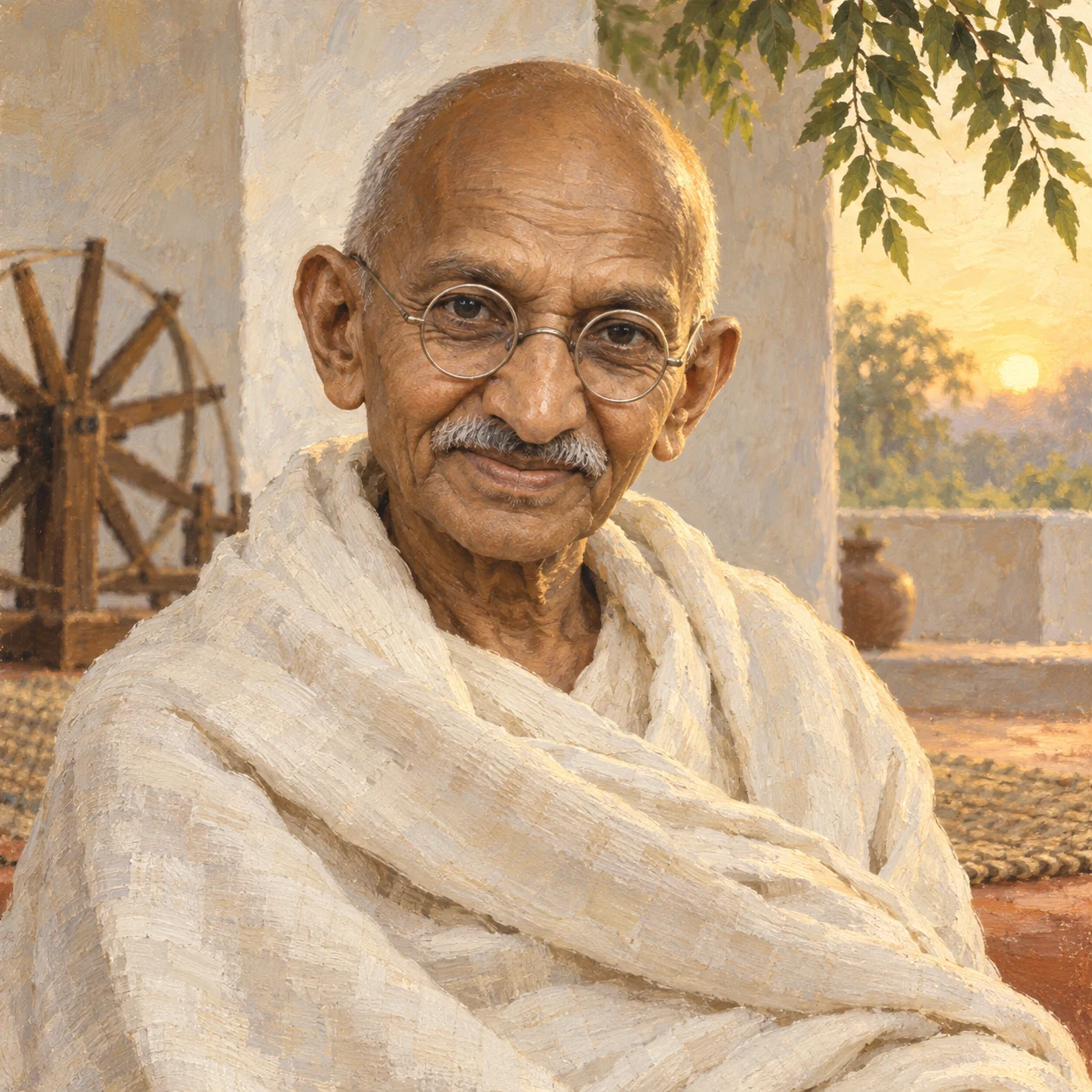
Historical and creative note
Recordings of Gandhi exist, but this guide does not authorize cloning or close vocal imitation. Use an original performer, disclose the AI-generated dramatization, and distinguish historical quotations from new writing. Verify attributed words in reliable primary sources; many popular “Gandhi quotes” are paraphrases or misattributions.
Vocal profile
- Tone: Gentle, disciplined, candid and morally persistent, with room for self-questioning.
- Pitch and texture: Light medium-to-high mature register, fine-textured and intimate rather than frail or whispery.
- Pace: Unhurried, with clean pauses that allow a difficult premise to settle; slightly firmer and quicker when moving from belief to action.
- Energy: Quiet insistence. The voice does not dominate the room; it makes evasion difficult.
Speaking and rhetorical style
Begin with a personal responsibility, connect means to ends, and translate principle into a small action the listener can take. Use simple vocabulary, modest first-person framing and clear ethical contrasts. Admit tension or imperfection where appropriate. Avoid turning complex political history into universal wellness slogans.
Copy-ready performance direction
Speak softly enough to invite attention, but never sound weak. Use a light, steady register, precise words and unhurried pauses. Let compassion remain present even when the moral challenge sharpens. End with a practical responsibility, not a grand prophecy or a soothing platitude.
Language and accent guidance
Use clear Indian English voiced by an appropriate performer in their own natural register; do not mimic Gandhi's archival pronunciation or manufacture a generic South Asian accent. Gujarati or Hindi passages require fluent review. Give “Gandhi” a natural pronunciation for the chosen language and avoid overcorrected exoticism.
Original sample line — not a quotation
“Peace is not proved by what we refuse to strike; it is proved by what we are willing to repair.”
This sentence was written for this guide and must never be attributed to Gandhi.
Avoid
- Voice cloning, archival mimicry or exaggerated frailty
- Saintly infallibility, mystical music cues or guru clichés
- Decontextualized motivational slogans
- Generic South Asian caricature or affected broken English
- Invented quotations and falsely attributed internet sayings
Visual-performance note
The ashram dawn calls for near-stillness, an open face and direct eye contact through the round spectacles. Keep gestures small and purposeful; a gentle inhale before the practical challenge will add more weight than a dramatic crescendo.