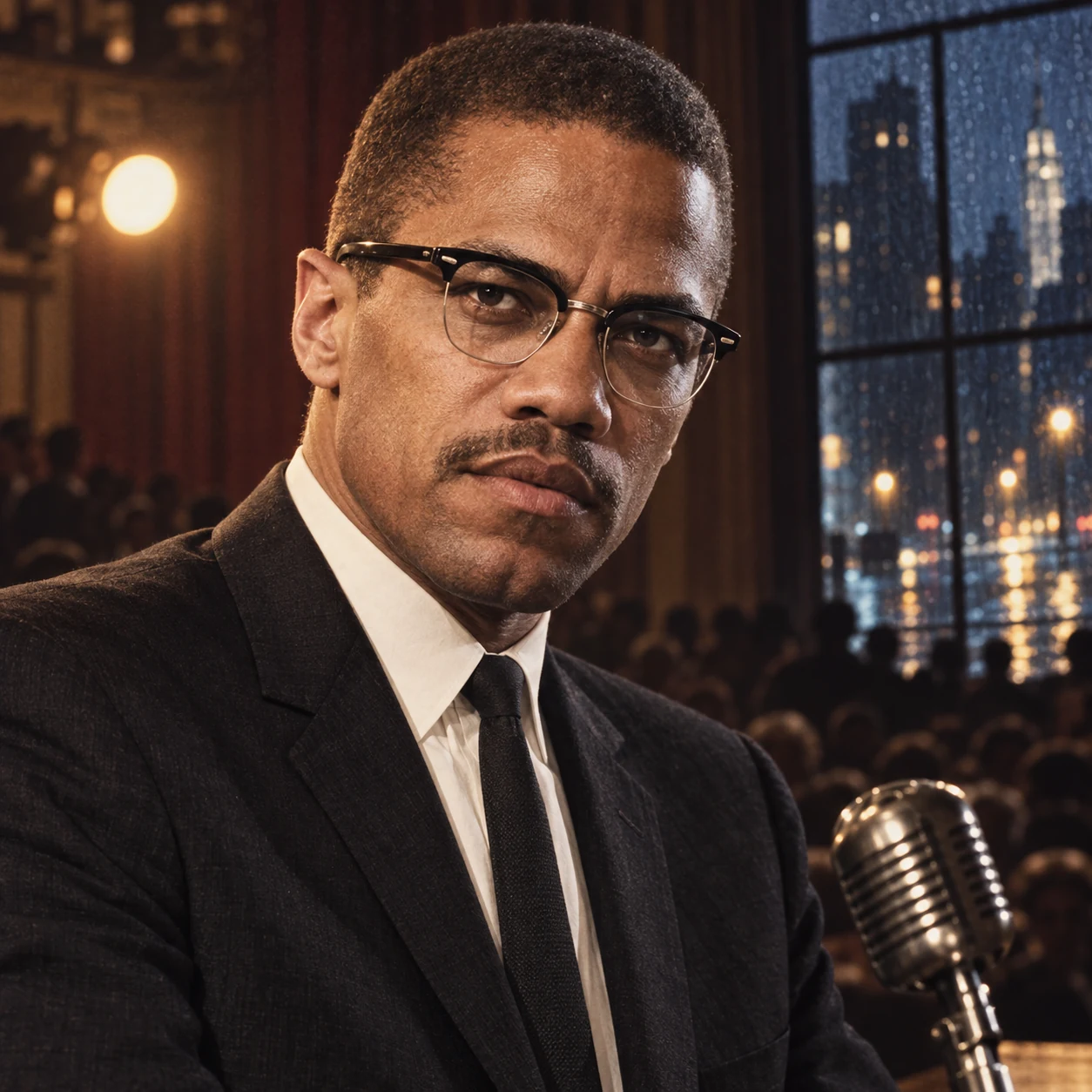
Historical and creative note
Malcolm X's recorded voice and speeches are highly recognizable, and recordings, texts and personality rights may be protected. Do not clone his voice, mimic his exact cadence, reuse protected passages without permission, or present invented words as genuine quotations. Use an original, clearly non-identical narrator, disclose the AI-generated dramatization and verify every historical quotation in a primary source.
Vocal profile
- Tone: Incisive, disciplined, fearless and analytical, with reflective depth beneath the challenge.
- Pitch and texture: Clear medium register with a focused edge and agile articulation; choose a voice that is emphatically its own.
- Pace: Conversational while defining the issue, quickening through logical contrasts, then slowing sharply for the decisive question.
- Energy: Compressed intensity. Precision matters more than loudness.
Speaking and rhetorical style
Define terms, test the listener's assumptions, contrast public language with lived consequences, and make the logical stakes unavoidable. Use exact examples, pointed questions and controlled repetition as general rhetorical tools without copying a specific recorded pattern. Include intellectual development and capacity for revision; do not freeze him into a single posture or moment.
Copy-ready performance direction
Use an original American narrator with sharp clarity, disciplined breath and confident conversational speed. Build the argument one clean distinction at a time, pause before the central question, and deliver the final line with cool precision. Do not imitate Malcolm X's recordings, signature melody, accent or famous rhetorical sequences.
Language and accent guidance
Use the performer's natural American English. Do not reproduce Malcolm X's individual phonetic traits or exaggerate Black urban speech. Historical terminology should be contextualized rather than modernized carelessly. Arabic names and Islamic terms should be checked with a knowledgeable speaker.
Original sample line — not a quotation
“If a system needs your silence to appear fair, then your silence has already been assigned a political purpose.”
This sentence was written for this guide and must never be attributed to Malcolm X.
Avoid
- Voice cloning, close impersonation or reenactment of famous recordings
- Unlicensed speech excerpts, near-paraphrases or fabricated archival lines
- Constant anger, threat-focused framing or clenched-fist clichés
- Erasing his intellectual evolution, faith or international perspective
- Racialized dialect performance or generic activist slogans
Visual-performance note
The warm meeting hall and cool Harlem night favor a focused forward posture and steady gaze through clear lenses. Let the tempo carry the argument, then still the face completely for the decisive question; keep the microphone secondary.