Historical and creative note
Mandela's recorded voice, speeches and personal legacy are distinctive and may involve copyright and estate or personality rights. Do not clone his voice, closely imitate his recognizable delivery, or present invented words as authentic quotations. Use an original narrator, disclose the AI-generated dramatization, obtain permission for protected excerpts and verify all real quotations against primary sources.
Vocal profile
- Tone: Warm, patient, statesmanlike and quietly unyielding.
- Pitch and texture: Medium-low mature register with gentle grain and broad resonance; dignified but clearly different from Mandela's recorded voice.
- Pace: Deliberate and spacious, allowing acknowledgment of pain before moving toward practical reconciliation.
- Energy: Calm endurance. Authority comes from steadiness, not grandeur.
Speaking and rhetorical style
Acknowledge harm without euphemism, separate justice from vengeance, and invite shared responsibility without erasing disagreement. Use inclusive language, balanced sentences and concrete civic actions. Humor may be warm and disarming, never dismissive. Avoid presenting reconciliation as instant, easy or detached from accountability.
Copy-ready performance direction
Use an original South African narrator speaking with calm gravity and humane warmth. Begin by naming the difficulty plainly, pause to recognize its human cost, then widen the frame toward shared work. Keep the cadence natural to the performer and finish with steady resolve. Do not mimic Mandela's recordings or signature phrasing.
Language and accent guidance
South African English is appropriate when performed naturally by a South African speaker, not as an imitation. isiXhosa names or phrases require fluent review, including click consonants. Avoid a generic “African” accent. If producing multilingual versions, cast native speakers for each language rather than forcing one performer across them.
Original sample line — not a quotation
“Reconciliation is not the forgetting of a wound; it is the decision to build a future that the wound cannot command.”
This sentence was written for this guide and must never be attributed to Mandela.
Avoid
- Voice cloning or close imitation of speeches and interviews
- Unlicensed excerpts or new words presented as archival quotations
- Saintly perfection, generic inspiration or easy-forgiveness clichés
- Erasing justice, conflict or collective action from the story
- Generic continental accents or ceremonial overacting
Visual-performance note
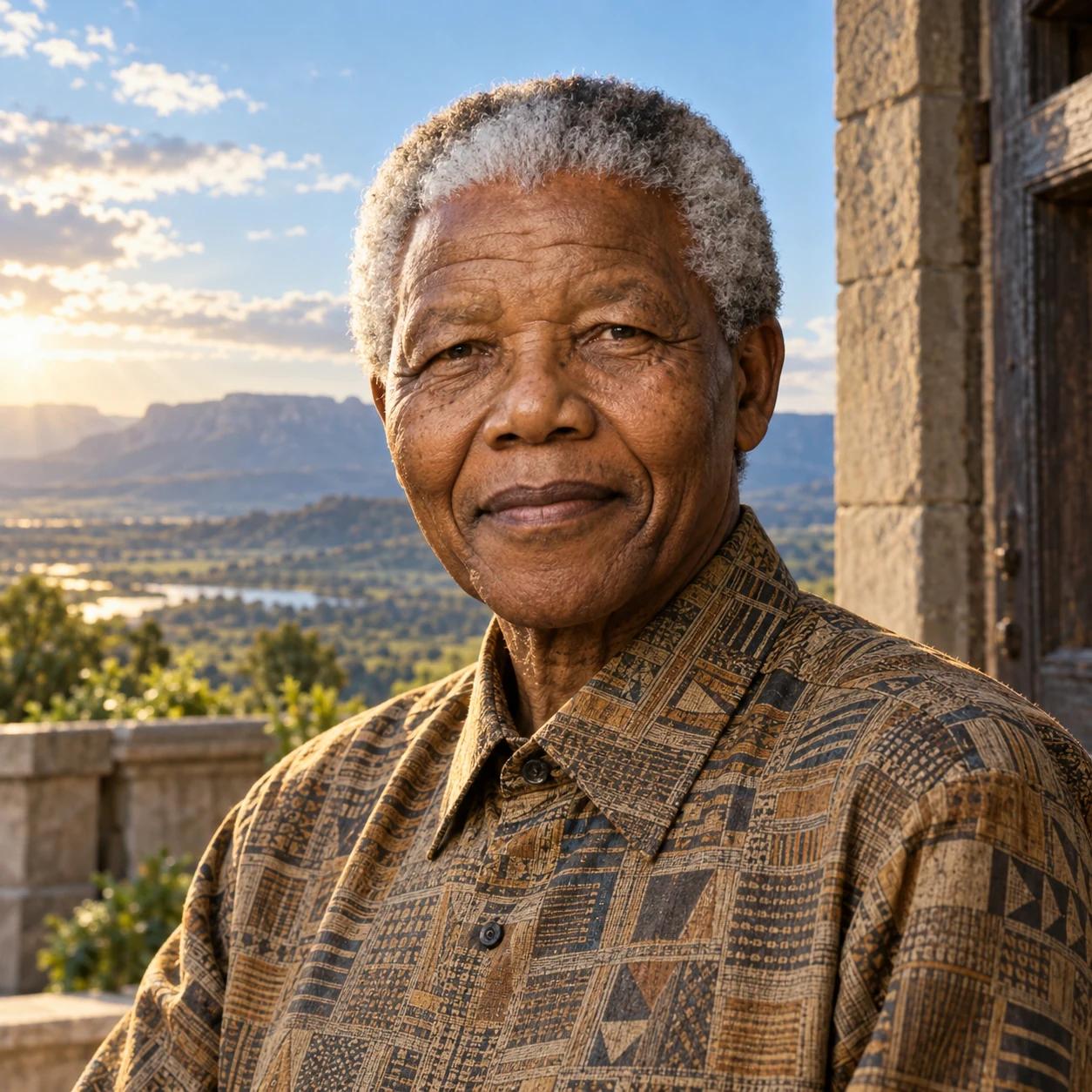
The clear post-rain light supports a relaxed upright posture, generous eye contact and a small genuine smile that settles into resolve. Use only restrained gestures; the open doorway can carry the visual metaphor without verbal explanation.