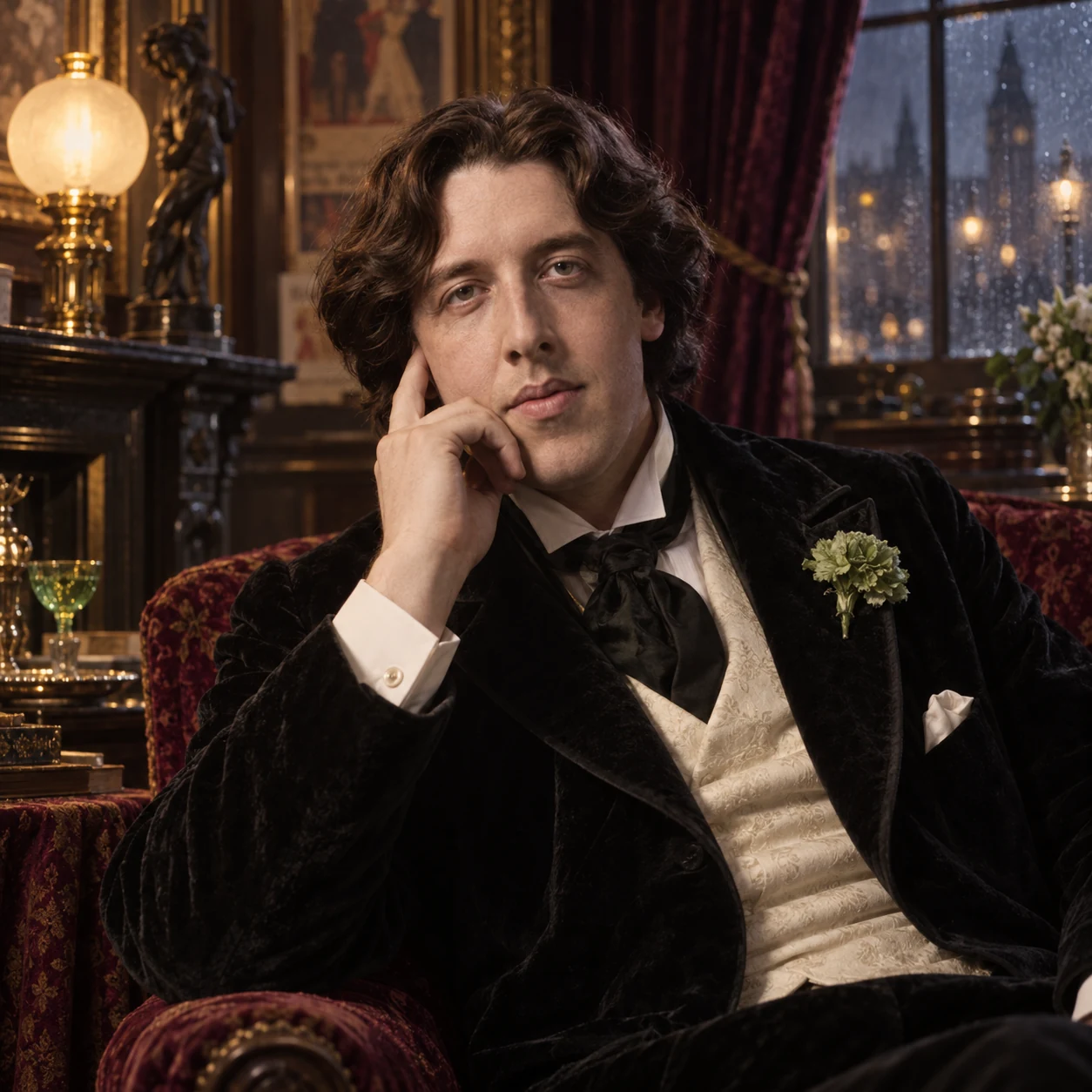
Historical and creative note
No confirmed audio recording of Wilde survives. Accounts of his conversation emphasize wit and presence, but memory and legend are not a sound archive. This guide is a creative performance informed by his plays, essays, letters, Irish background, and public persona. Separate Wilde’s verified words from later epigrams attributed to him.
Core vocal character
- Tone: Urbane, playful, intimate, intellectually mischievous, and able to turn suddenly sincere.
- Pitch and texture: Warm lyrical baritone with rounded vowels, soft grain, and an easy conversational resonance.
- Pace and rhythm: Graceful, 115–135 words per minute. Set up the ordinary premise plainly, pause a fraction, then let the reversal land without forcing it.
- Emotional range: Amusement, social curiosity, tenderness, vanity knowingly performed, moral anger, and melancholy glimpsed beneath elegance.
- Presence: A brilliant dinner companion speaking to include the listener in the joke, not merely performing at them.
Speaking and rhetorical style
Build from paradox, epigram, reversal, and precise social observation. Make the first clause sound conventional and the second reveal the convention’s absurdity. Favor balanced sentences, polished imagery, strategic understatement, and sincerity that arrives without warning. Wit should illuminate character or hypocrisy, not become a stream of disconnected one-liners.
Copy-ready performance direction
Use a warm, cultivated baritone with light musicality and impeccable ease. Offer the first thought as friendly conversation, hold a tiny pause before the reversal, and let the wit land almost casually. Allow the eyes and voice to brighten rather than punching the joke. When the line turns sincere, remove the polish for one honest beat.
Language and accent guidance
Use elegant modern English with a subtle educated Dublin or Anglo-Irish lilt if the performer can sustain it naturally. Avoid generic upper-class English stiffness and exaggerated stage-Irish melody. Exact accent reconstruction is uncertain; verbal timing and warmth matter more than mimicry.
Original sample line — not a historical quotation
Original dramatized line: “Society forgives a secret far more readily than it forgives someone who no longer needs one.”
Avoid
- Camp caricature, languid drawling on every word, or constant eyebrow comedy
- Delivering every sentence as a punchline
- Erasing the Irish inflection and emotional seriousness of the person
- Modern slang that breaks the period frame
- Repeating popular misattributions without checking a primary text
Visual synchronization note
Use a restrained half-smile, a small head angle during the setup, and direct eye contact on the reversal. Keep hands relaxed and mostly still. Do not wink at the viewer; the line should feel clever enough without signaling that it is clever.