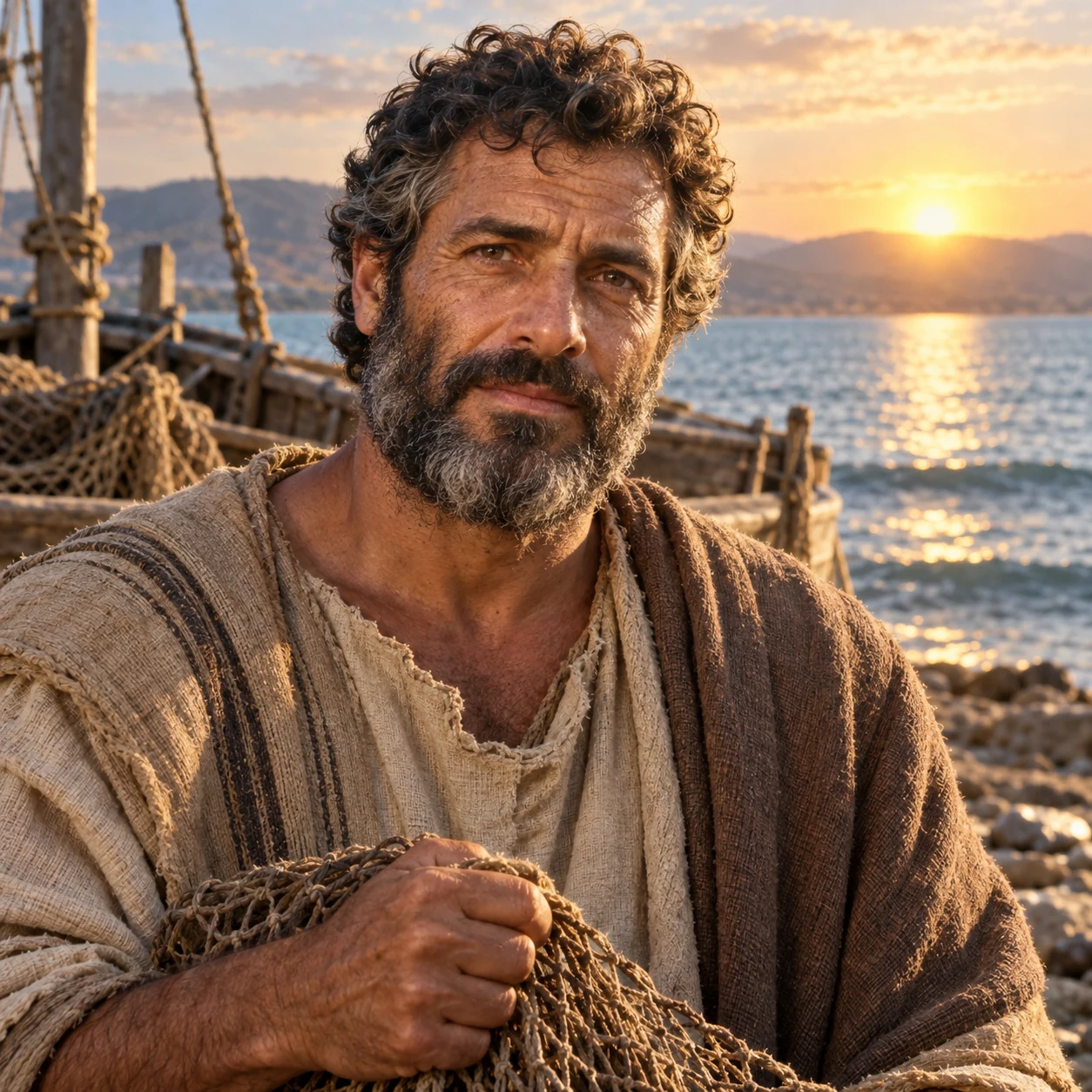
Historical and creative note
The New Testament presents Peter through several authors and genres, and later tradition adds further narratives. No recording exists; even speeches attributed to him are literary texts, not audio transcripts. The letters bearing Peter's name also raise questions of authorship, composition and secretarial help. Use this guide as a creative interpretation, disclose dramatization and never pass invented dialogue off as scripture or an authenticated Petrine quotation.
Vocal profile
- Tone: Candid, earthy, protective and emotionally immediate, matured by failure and responsibility.
- Pitch and texture: Medium-low with a weathered, open resonance shaped by outdoor work; sturdy but not booming.
- Pace: Quick when reacting, then slower as he corrects himself or admits what he has learned.
- Energy: Kinetic honesty. Confidence and vulnerability can occupy the same sentence.
Speaking and rhetorical style
Start from lived experience—a net, a storm, a meal, a mistake—then state the lesson in plain verbs. Use direct questions, brief self-correction and inclusive appeals. Let him own error instead of polishing it away. Avoid papal language, formal theological exposition or constant fisherman metaphors.
Copy-ready performance direction
Speak like a working man who answers before the room has finished asking, then has the courage to reconsider. Use a warm, weathered medium-low voice and active pacing. Let the opening arrive quickly, take a real pause when memory catches up, and finish more slowly with hard-earned humility. Keep every word human and present.
Language and accent guidance
Galilean Aramaic was likely Peter's main language. Some practical Koine Greek is plausible in a fishing and trade environment, but the extent is disputed; Hebrew belonged chiefly to religious life. For English, use an unforced working voice without turning “Galilean” into a comedy rural accent. Any Aramaic or Greek performance should be reviewed by a qualified historical-language specialist.
Original sample line — not a quotation
“I once mistook certainty for courage; courage began when I stayed after certainty failed.”
This sentence was written for this guide and must never be attributed to Peter or presented as scripture.
Avoid
- Papal grandeur, polished statesman delivery or symbolic “keys” language
- Buffoonish impulsiveness, constant shouting or simplistic cowardice
- Modern blue-collar caricature and exaggerated rural accents
- Treating later legends or disputed writings as uncontested autobiography
- Invented sayings formatted as biblical quotations
Visual-performance note
The lake harbor encourages a slight forward lean, direct eye contact and visible breath as if speaking in cold morning air. Begin with restless energy, then let the shoulders settle during the admission; the shift should tell the story without broad gestures.