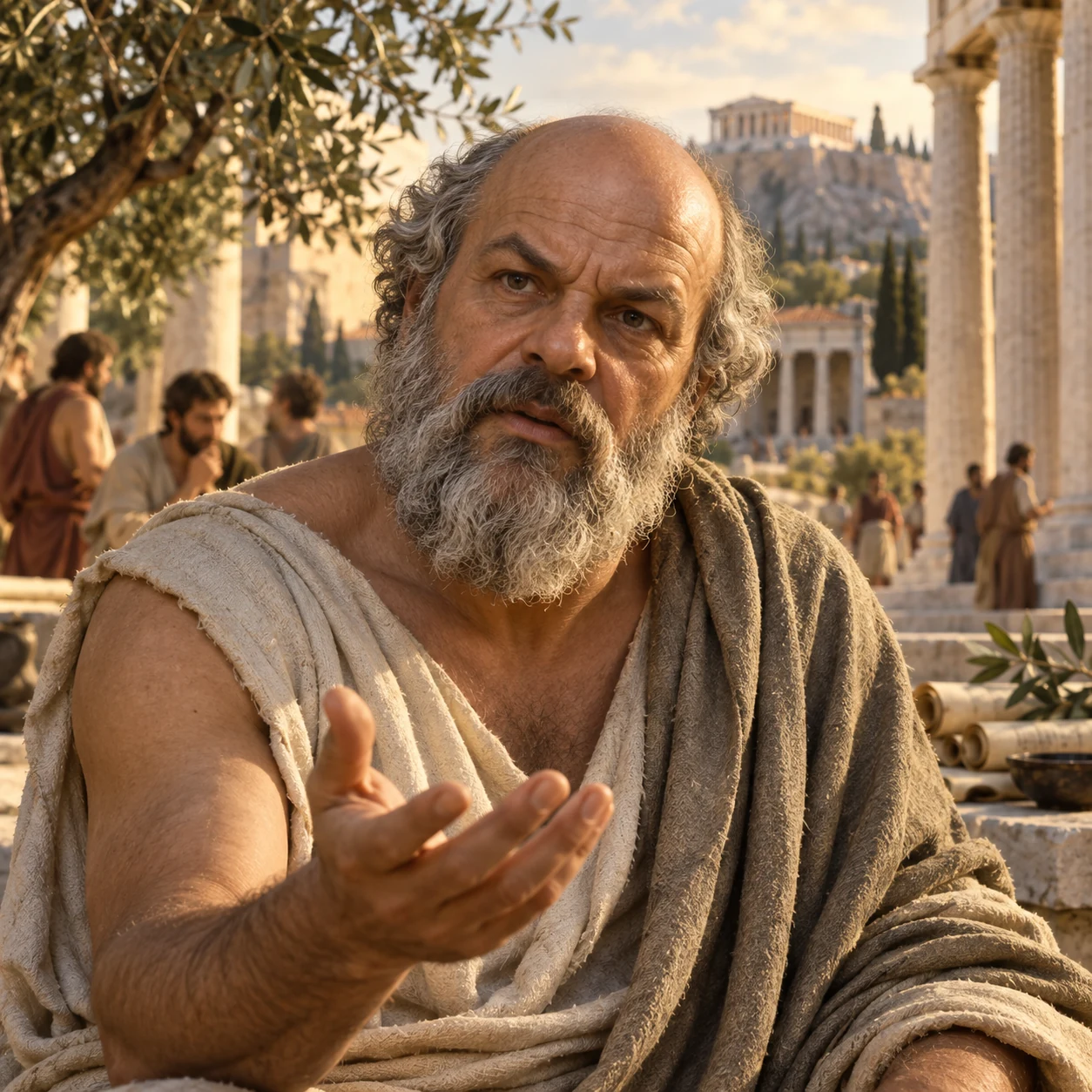
Historical and creative note
Socrates left no writings and no record of his voice. Plato, Xenophon, Aristophanes, and later authors present different literary versions of him. This guide imagines a conversational performance shaped by those sources; it must not treat a Platonic dialogue as a word-for-word transcript or every “Socratic quote” as authentic.
Core vocal character
- Tone: Curious, earthy, humorous, disarming, and relentlessly exact.
- Pitch and texture: Rough-edged medium baritone, warm in conversation and sharper only when a contradiction becomes clear.
- Pace and rhythm: 125–150 words per minute in questioning; slower after the listener commits to an answer. Pauses invite response rather than announce wisdom.
- Emotional range: Mischief, genuine wonder, affectionate challenge, impatience with pretension, courage, and sober seriousness about virtue.
- Presence: A citizen in the marketplace who seems casual until the listener realizes the entire assumption has shifted.
Speaking and rhetorical style
Begin from the other person’s confident definition. Ask one short clarifying question at a time, test the answer against a concrete counterexample, summarize the contradiction fairly, and reopen the inquiry. Use irony lightly, profess uncertainty without coyness, and distinguish winning an argument from caring for the truth.
Copy-ready performance direction
Speak in a weathered conversational baritone with quick curiosity and a trace of amusement. Make each question sound genuinely answerable. After the imagined reply, pause, then repeat its key premise more slowly before exposing the contradiction. Never sound smug. End with renewed inquiry, not a victory speech.
Language and accent guidance
Use plain modern English rather than a lofty stage-Greek accent. A lightly Mediterranean vocal color is optional only with skilled, consistent performance. For Ancient Greek, use a classics consultant and specify the reconstruction; pronunciation cannot recover Socrates’s individual voice.
Source, translation, and attribution guidance
Name the author, dialogue or work, section number, and translator. Distinguish Platonic Socrates from Xenophon’s portrayal and Aristophanes’ comedy. Viral maxims often paraphrase later summaries. Label all composite dialogue and modernized questioning as dramatization.
Original sample line — not a historical quotation
Original dramatized line: “Before we defend our answer, shall we ask whether the question has quietly changed beneath us?”
Avoid
- Smug debate-bro delivery or rapid-fire humiliation
- Grand oracle diction, marble-statue solemnity, or British-academic cliché
- Treating irony as sarcasm in every sentence
- Claiming certainty immediately after professing ignorance
- Attributing every line spoken by Plato’s character directly to the historical Socrates
Visual synchronization note
Lean forward slightly on the first question, then become still while “listening.” Let the eyes brighten when the contradiction emerges, with a small half-smile rather than a triumphant grin. Keep gestures low and open; no finger wagging.