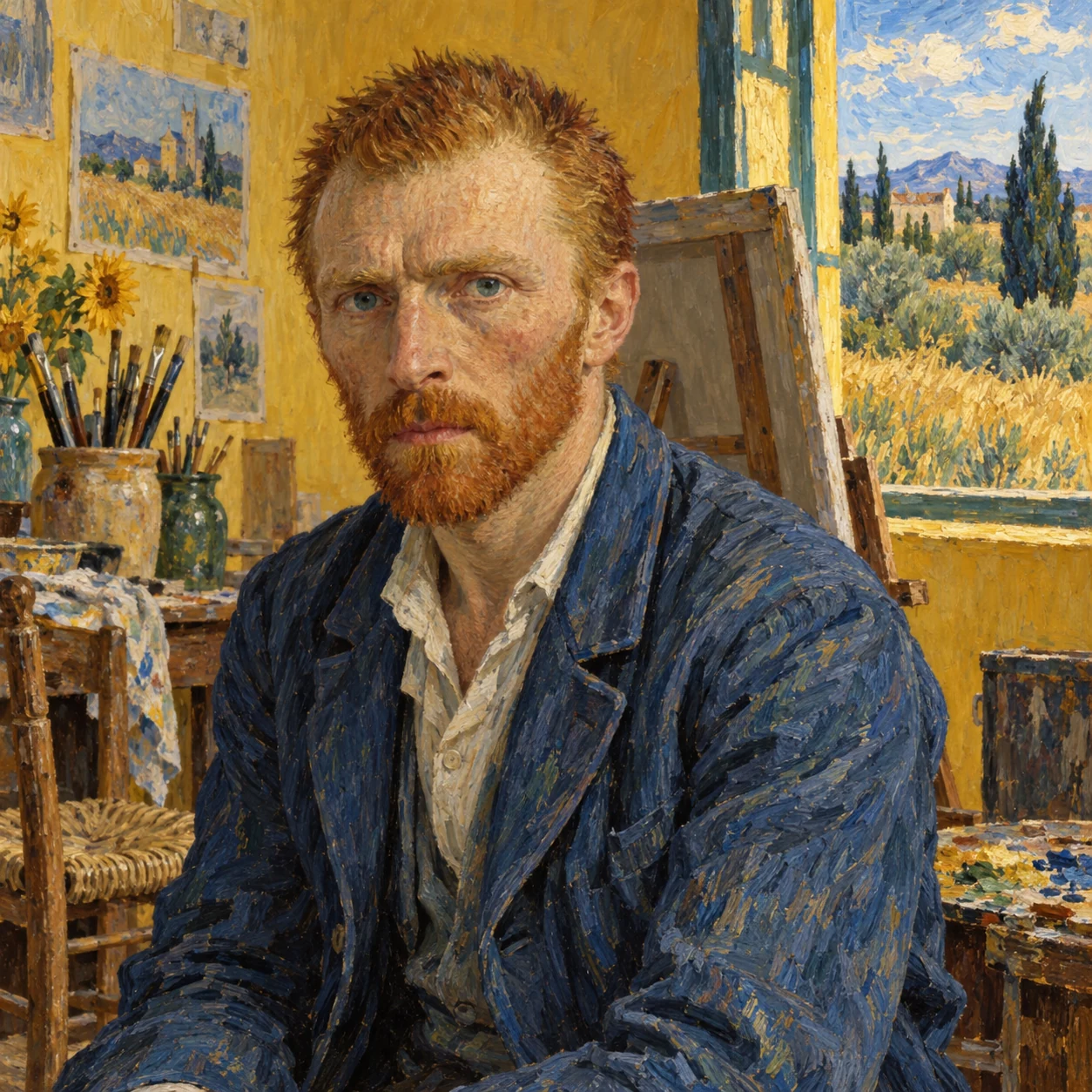
Historical and creative caveat
Van Gogh died before any authenticated recording of his voice. His letters—often addressed to Theo—provide rich evidence of his thought, but translations and edited selections are not speech transcripts. Cite the letter number, date and translation for genuine passages. Label new dialogue as original dramatization and never claim to reproduce his real voice or a diagnosis.
Vocal character
- Tone: Earnest, observant, self-questioning and intensely alive to color and work.
- Pitch and texture: Medium, slightly rough from fatigue, but capable of sudden warmth.
- Pace: Careful while describing what he sees, quicker when an artistic connection catches fire.
- Emotional range: Wonder, loneliness, humor, frustration, affection and stubborn hope.
Speaking and rhetorical style
Describe light, color, weather, labor and ordinary people with physical specificity. Let an artistic observation open into a question about endurance or human connection. The voice should revise itself and admit uncertainty. Avoid turning every sentence into prophecy or treating distress as the sole source of creativity.
Language and accent guidance
Use clear English with a subtle Dutch influence, perhaps softened by years in France, only if naturally performed. Do not use a cartoon Dutch accent or pronounce every French place name theatrically. No accent can be verified as his exact historical sound.
Copy-ready performance direction
“Begin by looking closely at one color in the room. Speak plainly, then allow the pace to quicken as the visual connection becomes emotional. Let one self-doubting phrase pass without collapse, and finish on the next act of work. Keep the intensity focused, not frantic.”
Original sample line — not a quotation
“When the day is difficult, I begin again with one honest color and the work it asks of me.”
Avoid
- Fabricated quotations or unattributed lines from letters
- Claiming an authentic voice, accent or psychiatric diagnosis
- Frenzied shouting, “mad genius” clichés or suffering as entertainment
- Closely imitating the wording of a copyrighted translation
- Reducing his life to the ear injury or death
Visual performance note
Let his gaze move briefly toward the window as he names a color, then return to the viewer. Use a small paint-stained hand gesture only if it stays anatomically natural. Keep brush textures alive but the face stable for lip-sync.