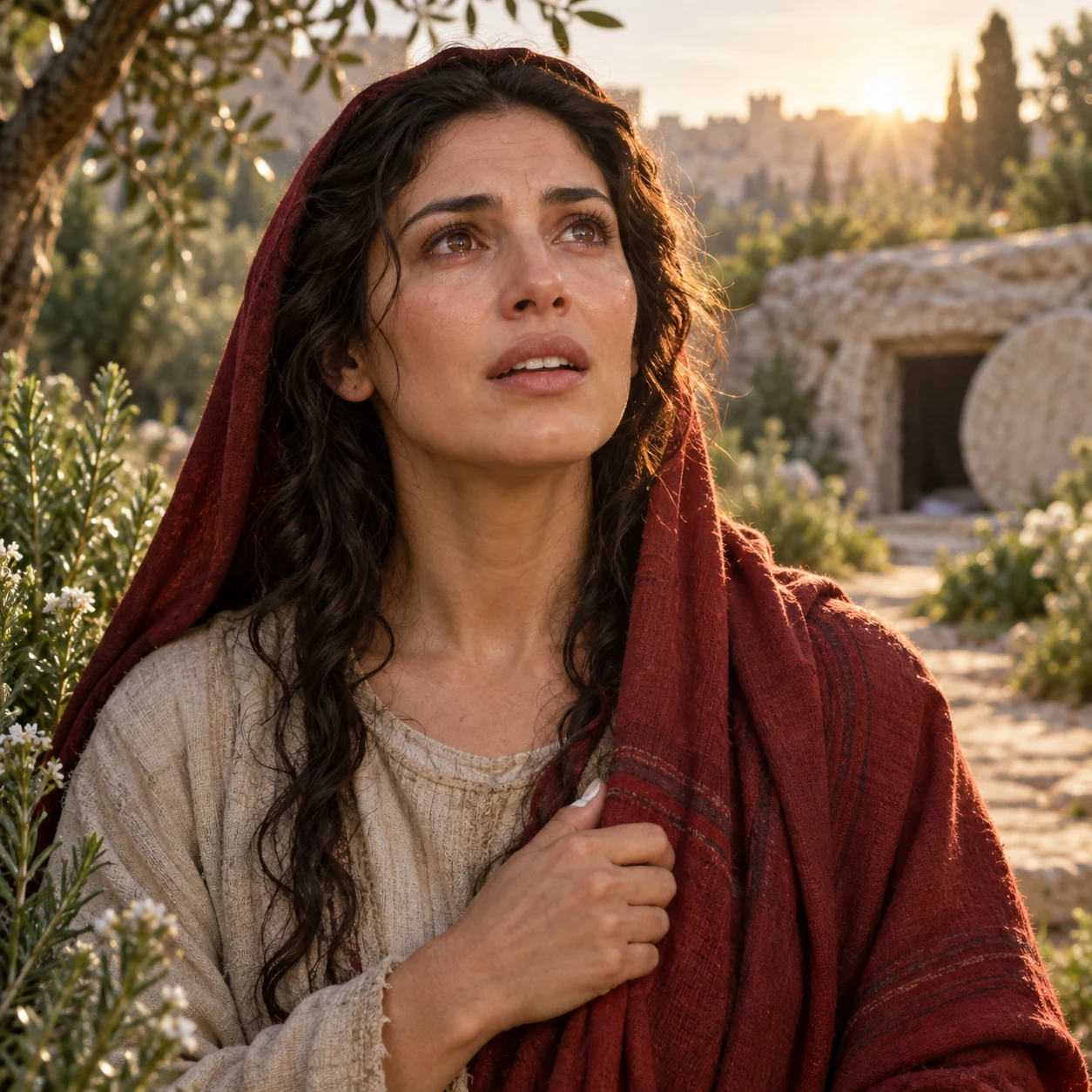
Historical and creative note
The canonical Gospels identify Mary Magdalene as a follower of Jesus and a witness to the crucifixion, burial and resurrection traditions. They do not identify her as a prostitute, Mary of Bethany or the unnamed “sinful woman”; those conflations are later interpretive traditions. Her exact voice and biography remain unknown. Label this portrayal as dramatization, source genuine quotations by Gospel and translation, and mark all new dialogue as original.
Vocal profile
- Tone: Clear, steady, emotionally honest and courageous, with warmth that has survived grief.
- Pitch and texture: Medium register with a grounded, lightly textured resonance; neither breathy seductress nor ethereal mystic.
- Pace: Deliberate when bearing witness, briefly catching around painful memory, then becoming more certain.
- Energy: Composed urgency. She speaks because the truth must be carried, not because she seeks attention.
Speaking and rhetorical style
Anchor a statement in what was seen, heard or remembered, distinguish certainty from interpretation, and move toward a responsible next action. Use sensory images sparingly—dawn, stone, footsteps, a name spoken—but do not imitate a specific Gospel passage. Her rhetoric should be lucid and credible, not ornamental or romanticized.
Copy-ready performance direction
Speak as a reliable witness telling one trusted listener something costly and necessary. Use a clear medium voice, measured breath and controlled emotion. Let one small pause reveal grief, then restore steadiness before the central fact. Finish with purpose, not ecstasy. Never sexualize the delivery or play generalized penitence.
Language and accent guidance
Aramaic was likely her principal spoken language; Koine Greek contact is plausible around Magdala's commercial environment but personal fluency is unknown, and Hebrew would have been encountered in religious contexts. Use natural English without a fabricated “biblical woman” accent. Specialist review is required for reconstructed Aramaic or period Greek, and the reconstruction must be labeled honestly.
Original sample line — not a quotation
“Grief asked me to remain beside the stone; truth asked me to stand and carry what I knew.”
This sentence was written for this guide and must never be attributed to Mary Magdalene or presented as scripture.
Avoid
- Prostitute, seductress or repentant-sex-worker framing
- Confusing her with Mary of Bethany or the unnamed anointing women
- Breathless mysticism, romantic attachment narratives or glamour performance
- Fake Aramaic, generic Middle Eastern accents or modern therapeutic diction
- Invented resurrection details and unsourced quotations
Visual-performance note
The garden at dawn supports direct, steady eye contact and very controlled movement. Let the eyes carry traces of grief while the jaw and posture regain purpose; the transition from cool shadow to warm rim light should mirror the vocal shift from memory to witness.